


| Issue |
EPJ Photovolt.
Volume 17, 2026
Special Issue on ‘EU PVSEC 2025: State of the Art and Developments in Photovoltaics', edited by Robert Kenny and Carlos del Cañizo
|
|
|---|---|---|
| Article Number | 15 | |
| Number of page(s) | 7 | |
| DOI | https://doi.org/10.1051/epjpv/2026007 | |
| Published online | 17 March 2026 | |
https://doi.org/10.1051/epjpv/2026007
Original Article
UV-induced degradation: comparative analysis of PV module testing and stabilization procedures against outdoor behavior
1
Fraunhofer Institute for Solar Energy Systems ISE, Heidenhofstr. 2, 79110 Freiburg, Germany
2
Fraunhofer Center for Silicon Photovoltaics CSP, Otto-Eißfeldt-Str. 12, 06120 Halle (Saale), Germany
* e-mail: This email address is being protected from spambots. You need JavaScript enabled to view it.
Received:
19
September
2025
Accepted:
24
February
2026
Published online: 17 March 2026
Abstract
UV-induced degradation (UVID) represents a critical reliability concern for TOPCon-based photovoltaic modules, yet the correlation between laboratory testing and real-world performance remains poorly understood. This study validates indoor UVID testing protocols against outdoor degradation through comprehensive analysis of four module types across five outdoor sites with up to 28 months of field exposure. We demonstrate that post-UV stabilization via brief light soaking is essential for accurate laboratory assessment, effectively reversing dark storage effects that otherwise confound UVID measurements. Comparative analysis reveals a strong relation between indoor testing (following IEC 61215-2:2021 MQT10) and outdoor degradation when proper stabilization is applied, with indoor slightly but consistently overestimating field degradation for TOPCon modules. Notably, while dark storage effects cause significant power loss under laboratory conditions, they do not significantly impact outdoor performance, most likely due to rapid morning stabilization upon light exposure. These findings provide experimental validation for stabilization procedures in testing standards and demonstrate that properly conducted indoor UVID tests can reliably predict long-term outdoor performance, enabling more accurate module reliability assessments for the photovoltaic industry.
Key words: UV-induced degradation / reliability / stabilization / photovoltaics / PV modules / outdoor performance monitoring
© P. Gebhardt et al., Published by EDP Sciences, 2026
 This is an Open Access article distributed under the terms of the Creative Commons Attribution License (https://creativecommons.org/licenses/by/4.0), which permits unrestricted use, distribution, and reproduction in any medium, provided the original work is properly cited.
1 Introduction
TOPCon (Tunnel oxide passivated contact) is the current mainstream photovoltaic (PV) cell technology. However, since the introduction of TOPCon-based modules into the market, significant degradation due to UV irradiation has been observed in accelerated indoor tests for many commercially available module types [1,2]. While the underlying mechanism is not yet completely understood, first results point toward an issue at the cell level, which is mainly influenced by the properties of the passivation layers [3,4] and the diffusion of hydrogen atoms [5].
In the lab, PV modules exhibit an additional power loss during dark storage after UV-induced degradation (UVID) [6,7]. Recent work has led to the development of a stabilization procedure by light soaking after UVID testing in the lab [6,7] to reverse these effects on indoor power measurements. These alterations to the best-practice test conditions have led to a lower overall magnitude in the final measured degradation after testing in UV irradiation test chambers [6]. However, the validity of UVID tests remains under investigation [3]. Although UVID has been observed in the field [8,9], experimental correlation between indoor testing and actual outdoor performance and degradation is still scarce, leaving uncertainty about the long-term impacts of outdoor exposure as well as the validity and accuracy of current indoor test methods.
In this work, we compare four different UVID-affected PV module types from five different outdoor sites using indoor UVID tests in order to determine how well the indoor testing and stabilization procedures mirror the outdoor performance and degradation. On one site (Fraunhofer ISE’s Outdoor Performance Lab, Freiburg, Germany), we investigate an innovative approach of field-exposing previously UV-aged PV modules, referred to as “UV pre-aging”. This has the potential benefit of reaching a significant state of degradation faster, i.e., by applying a UV dose corresponding to one or two years within a few weeks in the lab, but still allows observing the effects of the degradation on the operation of the modules under realistic outdoor conditions, e.g., the effects on performance during non-standard irradiance and temperature conditions and the effect on electrical yield.
In addition, we investigate the influence of the dark storage effect, which was previously only observed indoors, on the outdoor performance.
2 Materials and methods
Four different commercial utility-scale module types were investigated in this study: three based on TOPCon technology and one, Type D, containing PERC cells. Each module type was manufactured by a different company, with three of the module types being produced by Chinese manufacturers and one by a German manufacturer. Modules of Types A, B, and D were bifacial glass-glass modules, whereas Type C was a monofacial glass-backsheet module.
The outdoor exposure Sites 1 and 5 were roof installations at Fraunhofer ISE; the remaining Sites 2–4 were commercial power plants in Germany or Spain (Tab. 1). For Sites 1 and 5, the modules were monitored during the outdoor exposure in Freiburg, Germany. The time frame of outdoor exposure varies between sites, but the first outdoor exposure started around January 2023.
UVID testing was done according to IEC 61215-2:2021 MQT10 under open-circuit conditions using UVA-fluorescent lamps (see Fig. S1). Stabilization after UV testing, field exposure, or of spare modules was carried out in a climate chamber with an integrated AAA solar simulator exposing the module to an AM1.5 spectrum with 1000 W/m2 and a UV portion of 2.43%. Spare modules were stabilized for 5 h, while fielded or indoor-UV-aged modules were stabilized for 5 min followed by 10 min at low irradiance to allow for temperature stabilization. After that, the fielded or indoor UV-aged modules were directly transferred to the flasher for subsequent power measurements within 15 min.
The term “pre-aged modules” refers to modules that were first exposed to indoor UV testing before being exposed outdoors.
The indoor performance measurements of unaged modules or after indoor or outdoor aging for all modules except Type B were performed at STC in accordance with IEC 60904-1:2020 under irradiance with a pulsed solar simulator Class A+A+A+ according to IEC 60904-9:2020. The irradiance was controlled with a reference solar cell during the measurement to correct fluctuations. All modules measured indoors after field exposure were cleaned of dust or soiling, if applicable. Module Type B was exclusively measured in the field by a mobile flash solar simulator class A+A+A+; the obtained data were corrected to standard conditions. The power measurements were done by a third party and were provided by the power plant operator.
For the monitoring stations in Freiburg (Sites 1 and 5), irradiance in plane of array (POA) was measured using a spectrally flat Class A pyranometer with a spectral range of 285 to 2800 nm. For the outdoor Sites 2 to 4, irradiance data was obtained from spectral on-demand data of the National Solar Radiation Data Base (NSRDB) [10]. To calculate the UV dose, all light with a wavelength ≤365 nm was considered. The corresponding energy is required to break Si-H bonds, which is considered the first step of the UVID mechanism in TOPCon solar cells [3,9,11]. This also applies to the indoor UV test, where the UV dose is otherwise often measured for all light ≤400 nm [12]. Thereby, a conventional UV dose of 60 kWh/m2 (≤400 nm) corresponds to 44.0 kWh/m2 (≤365 nm) in our test. Notably, not the irradiation has been changed in the UV test, but only the calculation of the UV dose to better depict the energy range that is relevant for causing UVID.
Overview of outdoor sites and module types investigated in this study. P@STC = indoor performance measurement at standard test conditions.
2.1 Site 1 monitoring data acquisition and handling
For Site 1, two modules were subjected to a 44 kWh/m2 indoor UV exposure. These modules, and two non-aged modules of the same Type A, were subsequently characterized in indoor flasher measurements and then installed at a rooftop monitoring station in Freiburg, Germany, at a 45° tilt angle facing south. To avoid inhomogeneous rear-side irradiance, the rear of the samples was covered with wood, leaving around 10 cm of spacing for air to flow and avoid overheating (Fig. 1). Each PV module was operated at its maximum power point (MPP) using a programmable electronic load, and I–V curves were recorded simultaneously at five-minute intervals to capture the evolution of the performance under real conditions, and the temperature of the modules was recorded with an attached PT100 sensor on the back. Additionally, plane of array (POA) irradiance was measured using a thermopile pyranometer together with a silicon reference cell, and a weather station logged ambient temperature, wind speed, and relative humidity at one‑minute averages.
I–V data were filtered to select steady‑state measurements with irradiance and temperature fluctuations during I–V curve capture below 1% to minimize transient conditions and measurement uncertainties. Measured I–V parameters (ISC, VOC, PMPP, FF, RS) were filtered within a narrow irradiance window of 775–825 Wm−2, and only data in steady-state conditions was used, where the irradiance and temperature fluctuations (changes between consecutive measurements) were below 1%. Then corrected to a common reference condition of nominal module operating temperature (NMOT) of G0 = 800 W m−2 and T0 = 42.5°C using standard correction formulas (Equations (1)–(3)) with the PV module datasheet temperature coefficients (γ, α, β) in%/°C, measured total irradiance in plane of array (G) in W m−2 and module temperature (T) in °C [13].
 (1)
(1)
 (2)
(2)
 (3)
(3)
 |
Fig. 1 Photographs of the outdoor installation on Site 1. |
2.2 Sites 2–5 data acquisition and handling
To compare outdoor degradation with the degradation after indoor UVID tests for Sites 2–5, spare modules (i.e., non-aged PV modules of the same type that were stored since the commissioning of the power plant) of Types B, C, and D were tested in indoor UVID tests according to IEC 61215:2023 MQT 10. All TOPCon modules underwent light stabilization prior to power measurement at standard conditions. The indoor aging was performed for two, three, and one module(s) for Types B, C, and D, respectively, and the mean degradation was used for further comparison. The outdoor degradation was determined as follows: For Type B, fielded and spare modules were measured in the field. For Sites 3 and 4 (Type C), fielded and spare modules were measured in the lab at STC. In both cases (Sites 2–4), the degradation was calculated as the mean difference between spare and fielded PV modules. For Type D (PERC), the modules were measured before and after outdoor exposure to calculate the mean degradation.
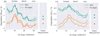 |
Fig. 2 Performance evolution through the year of exposure of representative new and UV pre-aged (44 kWh/m2) PV modules of Type A: PMPP (left) and VOC (right). The UV dose corresponds to light ≤365 nm. The bars represent the standard deviation during a period of three weeks. The dots correspond to the indoor power measurements at STC after outdoor exposure. |
3 Results
3.1 Outdoor monitoring on Site 1
As mentioned above, two of the modules exposed in Site 1 had been subjected to indoor UVID tests (IEC 61215-2 MQT 10) with a dose of 44 kWh/m2. The performance evolution was assessed using 15‑day averaging windows of the I–V curve corrected parameters (e.g., PMPP−0, VOC−0, ISC-0) to reduce short‑term variability and reveal trends throughout the exposure period. Results are reported as% deviation from the initial outdoor baseline. This baseline is defined as the average performance during the first week of exposure of the two new (unaged) samples. The comparison of new samples versus lab-aged allows for the assessment of how the UV pre‑aging affected field behavior.
Figure 2 shows the performance evolution of two pre-aged (44 kWh/m2) and two non-aged modules of Type A, respectively, through the year of exposure, which accumulated a UV dose of approximately 33 kWh/m2. During that year of exposure, the new samples decreased in maximum power (PMPP) around −1.6%, while VOC and ISC both decreased around −0.6%. In contrast, the lab-aged samples exposed outdoors immediately after receiving the indoor UV dose of 44 kWh/m2 showed a greater loss in maximum power of −2.2% during the first week, primarily due to a reduction in VOC, which averaged −1.6%. Hence, these modules show a 0.6% difference in PMPP between indoor and outdoor UV exposure, most likely due to the larger UV dose. Another interesting finding is that the yield of the pre-aged modules was −1.5% lower than that of the new modules.
Furthermore, the behavior of lab-aged samples outdoors revealed remarkable variability in VOC throughout the year of exposure, with an increase of around 1% between June and December, coming back close to the initial decrease level in summer. This may indicate a seasonal dependency due to the changes in irradiance and temperature level, which is currently under investigation. On the other hand, the effect is also observed, in a weaker form, for the non-aged module, suggesting that the observation could be related to the correction and filtering procedure.
The power measurements performed after the indoor pre-aging were carried out according to the standard procedures at the time (summer 2024) without a stabilization technique, resulting in an observed power loss around −6.5% (not shown). This highlights the dark storage effect for this module type but also renders these data meaningless for quantification of UVID. Performance measurements after one year outdoors (Fig. 2, dots) were carried out after stabilization and show an overall good agreement with the outdoor monitoring: The non-aged module showed a degradation of −1.4% (PMPP) and −0.7% (VOC), while the pre-aged module showed a degradation of −2.3% (PMPP) and −1.4% (VOC).
3.2 Comparison of outdoor vs. indoor degradation
Both indoor and outdoor degradation for Sites 2–5 is visualized in Figure 3 for PMPP and the mainly degrading parameter, VOC, respectively. The comparison shows that all the module types degrade significantly, both in the indoor UVID tests and outdoors. This correlation, often taken for granted when considering indoor accelerated aging tests, is an important confirmation that the indoor tests produce field-relevant results. For Types A (discussed above), B, and C, the degradation observed indoors and outdoors correlates well at the respective locations, especially considering the measurement uncertainties in field measurements (Type B) and sample-to-sample variation (all Types), which is represented by the spread of individual measurements (dots) for each type and location (Fig. 3). For Types C and D, where EL images were available, modules after both indoor and outdoor UV exposure show a checkerboard pattern (Fig. S4).
Overall, there is also a good agreement between indoor and outdoor degradation for Type D (PERC). Although there have been few reports on the UVID susceptibility of PERC recently, this probably stems from the higher market share of TOPCon. UVID has been established and investigated for PERC [14–16] in the past, so the observed effect of UVID is not surprising. However, experiments to rule out other degradation mechanisms, such as light and temperature-induced degradation (LeTID; compare the last paragraph of the supporting information), were carried out to ensure that the degradation can safely be attributed to UVID.
The indoor UV tests as defined in IEC 61215 and 61730 aim to simulate various degradation mechanisms on the cell and module/polymer level. In that context, the complete UV spectrum (≤400 nm) is typically considered for the calculation of the UV dose. A respective calculation for the experiments discussed above would consistently lead to stronger degradation in the lab compared with outdoors, as shown in the supporting information (Fig. S3). This demonstrates the importance of disclosing the irradiance spectrum used in indoor UVID tests and using the correct UV dose calculation procedure. The latter aspect is especially relevant when comparing indoor UVID results from different UV light sources. We therefore recommend to only consider light ≤365 nm for the calculation of UV dose for TOPCon UVID tests and disclose the portion of light ≤365 nm of the irradiance spectrum. In the context of UVID, the use of UV-fluorescent lamps, which typically have a major portion of the irradiance spectrum at ≤365 nm, seems particularly suitable to reach UV doses correlating to a certain outdoor scenario in a relatively short time; in contrast to other light sources like metal-halide lamps, which typically have a much higher portion of low-energy UV light that is presumably not able to trigger UVID in TOPCon cells.
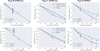 |
Fig. 3 Overview on mean degradation observed in PMPP (top) and VOC (bottom) after indoor UV test (green) or outdoor exposure (blue) at four different locations: Site 2, Type B (left), Site 3 and 4, Type C (middle) and Site 5, and Type D (PERC, right). The UV dose corresponds to light ≤365 nm. Please note that the y-axes are scaled differently. |
3.3 Effects of dark storage in the field
The observation of a dark storage effect on the UV-aged PV modules in the lab, even at storage conditions that were not completely dark, raised the question of whether similar effects could occur in field-aged modules at night during outdoor operation. To investigate this, four TOPCon PV modules of Type B were temporarily removed from the site after 14 months of outdoor exposure and stored under dark conditions while measuring the performance before, during, and after dark storage (Fig. 4). During the dark storage for approximately 4.5 h, the performance decreased by around −0.6% (PMPP) and showed recovery after re-exposure to sunlight. As can be seen in Figure 4, one module showed only little recovery after dark storage. However, considering the uncertainty of outdoor measurements in general and the unambiguous behavior of the three other modules, we assume that this difference was caused by a small deviation from the planned procedure between these measurements, which were carried out by a third party. We therefore assign a clear trend to the module behavior, which suggests that UVID-affected modules can in principle show additional degradation due to dark storage, which could potentially influence electroluminescence measurements that are carried out in the field during the night. It also indicates that modules brought into the lab for power measurements at standard test conditions (STC) in the context of general quality control should be stabilized beforehand, as they may show UVID effects and degrade during dark storage.
However, a comparison of the module performance of pre-aged vs. new PV modules in the morning of a clear-sky day during the first month of outdoor operation could not detect any significant effects of metastable behavior (Fig. 5). This finding suggests that either (a) the conditions at night are not suitable to create a dark storage effect or (b) the stabilization, which happens in less than a minute at an indoor irradiation of 1000 W/m2 [6], also happens very rapidly in outdoor operation. In the latter case, any potential power loss overnight should stabilize almost instantaneously after dawn, which aligns well with the described observations. Since these results were obtained from a clear-sky day, it cannot be excluded that the dark storage effect could influence the yield on cloudy mornings. In both cases, the results do not suggest any negative effects of dark storage on outdoor yield.
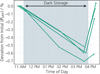 |
Fig. 4 Performance measurements of photovoltaic (PV) modules at Site 2. The modules were temporarily removed from their installation and stored in a dark environment between 11:30 AM and 4:00 PM. The last measurement was carried out directly after light exposure for a few minutes. |
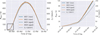 |
Fig. 5 Development of performance (PMPP) of modules of Type A throughout the day (left) and morning hours (right) of a clear-sky day in the first month of outdoor exposure. No peculiar behavior of the pre-aged PV modules (i.e., due to the dark storage effect) can be observed. |
4 Conclusion
This study successfully established a correlation between laboratory UV-induced degradation (UVID) testing and real-world outdoor performance of PV modules, addressing a critical knowledge gap in the field. The research demonstrates that a good agreement with actual field degradation can be achieved using indoor UVID testing protocols when combined with appropriate post-UV stabilization procedures.
Post-UV stabilization through brief light soaking at 1000 W/m2 is confirmed as a significant advancement in laboratory testing methodology. This stabilization procedure eliminates the effects of dark storage that could otherwise confound UVID measurements, enabling more accurate assessment of UV-related degradation mechanisms. The study's validation of this approach through one year of outdoor monitoring in Freiburg provides strong evidence for its practical relevance. Furthermore, the findings have immediate implications for industry standards, particularly IEC TS 63624-1, which is currently in a draft stage, by highlighting the importance and providing experimental validation for the use of a stabilization procedure. We aim to contribute to improved module reliability and enhance confidence in the validity of accelerated aging tests.
The comparative analysis across multiple module types and outdoor sites revealed a general agreement between indoor and outdoor degradation patterns by considering light ≤365 nm when calculating the UV dose. However, it should be noted that while this approach serves as a reasonable approximation, it remains to be determined what the exact spectral dependence of UVID is in typical TOPCon modules. There might be additional effects to take into account, e.g., the result from recent studies that UVB radiation may be significantly more damaging than UVA [3]. Therefore, the good agreement observed in this study between indoor and outdoor aging should not be interpreted as conclusive validation of the ≤365 nm damage model. There is currently insufficient information available to definitively conclude on the correct spectral damage model for UVID in TOPCon technology. Future research should focus on systematically investigating the spectral dependence of UVID in TOPCon modules to establish more accurate damage models, including the relative contributions of different UV wavelength ranges created by different light sources and potential interactions with visible light.
Additionally, investigating the seasonal performance variations of UV-aged PV modules, observed in VOC, as well as the effect of temperature would be beneficial. Expanding the study to include longer exposure periods would also provide valuable insight into the long-term effects and development of the degradation process.
Acknowledgments
The authors want to thank Doreen Moldenhauer (RheinEnergie AG) for supplying field-exposed PV modules and on-site power measurement data.
Funding
This research was funded by the Federal Ministry for Economic Affairs and Energy grants number 03EE1149A (“MiMoRisk”) and 03EE1133A (“GagaRIn”).
Conflicts of interest
The authors certify that they have no financial conflicts of interest (e.g., consultancies, stock ownership, equity interest, patent/licensing arrangements, etc.) in connection with this article.
Data availability statement
Data associated with this article cannot be disclosed due to confidentiality reasons.
Author contribution statement
Conceptualization, P.G. and M.R.; Investigation, P.G., M.R., E.F., E.S., M.P.; Data Curation, P.G., M.R., E.S.; Writing—–Original Draft Preparation, P.G.; Writing—–Review & Editing, M.R., E.F., C.R., E.S., M.P., I.H.; Visualization, P.G., M.R.; Supervision, C.R., I.H.; Project Administration, C.R.; Funding Acquisition, I.H.
Supplementary Material
Fig. S1: Development of outdoor performance of two new (top) and two UV-aged (60 kWh/m2) PV modules of Type A. The dots correspond to the indoor power measurements at STC after outdoor exposure.
Fig S2: Spectrum of light source used in accelerated UVID tests.
Fig. S3: Overview on mean degradation observed in PMPP (top) and VOC (bottom) after indoor UV test (green) or outdoor exposure (blue) at four different locations: Site 2, Type B (left); Site 3 and 4, Type C (middle) and Site 5, Type D (PERC, right). Please note that the y-axes are scaled differently. In contrast to Figure 3 of the main manuscript, light with a wavelength ≤400 contributes to the UV dose in this analysis.
Fig. S4: Exemplary electroluminescence images of Types C and D after UV exposure both indoors and outdoors.
Access Supplementary MaterialReferences
- P. Gebhardt, U. Kräling, E. Fokuhl, I. Hädrich, D. Philipp, Reliability of commercial TOPCon PV modules—an extensive comparative study, Prog. Photovolt.: Res. Appl. 33, 1378 (2024). https://doi.org/10.1002/pip.3868 [Google Scholar]
- 2025 Module Scorecard, Ultraviolet Induced Degradation: Kiwa PVEL PV Module Reliability Scorecard. (accessed: 02 Sep. 2025) Available: https://scorecard.pvel.com/uvid/ [Google Scholar]
- M.U. Khan et al., UV-induced degradation in TOPCon solar cells: Hydrogen dynamics and impact of UV wavelength, Sol. Energy Mater. Sol. Cells 294, 113895 (2026). https://doi.org/10.1016/j.solmat.2025.113895 [Google Scholar]
- C. Hollemann et al., UV stability of aluminum oxide fabricated with tube‐type plasma‐enhanced atomic layer deposition, Sol. RRL 9, 202500510 (2025). https://doi.org/10.1002/solr.202500510 [Google Scholar]
- F.T. Thome et al., UV‐induced degradation of industrial PERC, TOPCon, and HJT solar cells: the next big reliability challenge?, Sol. RRL 8, 2400628 (2024) https://doi.org/10.1002/solr.202400628 [Google Scholar]
- P. Gebhardt et al., Stabilization procedures for TOPCon PV modules after UV-induced degradation, Sol. Energy Mater. Sol. Cells 294, 113885 (2026). https://doi.org/10.1016/j.solmat.2025.113885 [Google Scholar]
- T. Karin, UVID initiates metastability in the dark: how to properly measure unstable SI modules, in PVRW: Photovoltaic Reliability Workshop (2025). (accessed: 31 Mar. 2025) [Google Scholar]
- S. Lust, S. Kuntamukkula, S. Friedrichs, L. Podlowski, Topcon solar modules: UV degradation in lab and field conditions, in Proceedings of the PV-Symposium (2025), Vol. 2 https://doi.org/10.52825/pv-symposium.v2i.2687 [Google Scholar]
- E.A. Gaulding et al., UV + damp heat induced power losses in fielded utility N‐Type Si PV modules, Prog. Photovolt.: Res. Appl. 33, 1236 (2025). https://doi.org/10.1002/pip.70017 [Google Scholar]
- M. Sengupta, Y. Xie, A. Lopez, A. Habte, G. Maclaurin, J. Shelby, The National Solar Radiation Data Base (NSRDB), Renew. Sustain. Energy Rev. 89, 51 (2018). https://doi.org/10.1016/j.rser.2018.03.003 [Google Scholar]
- R. Witteck et al., Reducing UV induced degradation losses of solar modules with c-Si solar cells featuring dielectric passivation layers, in 2017 IEEE 44th Photovoltaic Specialist Conference (PVSC) (IEEE, Washington, DC, 2017), pp. 1366–1370 [Google Scholar]
- International Electrotechnical Commission (IEC), IEC 61215-2:2016 Terrestrial photovoltaic (PV) modules—design qualification and type approval—Part 2: test procedures., IEC 61215-2:2016 (IEC, Geneva, Switzerland, 2016) [Google Scholar]
- R.M. Smith, D.C. Jordan, S.R. Kurtz, Outdoor PV module degradation of current-voltage parameters, Preprint, National Renewable Energy Laboratory (NREL, Golden, CO, United States) NREL/CP-5200-53713. https://docs.nrel.gov/docs/fy12osti/53713.pdf [Google Scholar]
- A. Sinha et al., UV‐induced degradation of high‐efficiency silicon PV modules with different cell architectures, Prog. Photovolt.: Res. Appl. 31, 36 (2022). https://doi.org/10.1002/pip.3606 [Google Scholar]
- R. Witteck et al., UV radiation hardness of photovoltaic modules featuring crystalline Si solar cells with AlOx/p+‐type Si and SiNy/n+‐type Si interfaces, Phys. Status Solidi RRL 11, 1700178 (2017). https://doi.org/10.1002/pssr.201700178 [Google Scholar]
- R. Witteck et al., UV-induced degradation of PERC solar modules with UV-transparent encapsulation materials, Prog. Photovolt.: Res. Appl. 25, 409 (2017). https://doi.org/10.1002/pip.2861 [Google Scholar]
Cite this article as: Paul Gebhardt, Mariella Rivera, Esther Fokuhl, Christian Reise, Erdmut Schnabel, Matthias Pander, Ingrid Hädrich, UV-induced degradation: comparative analysis of PV module testing and stabilization procedures against outdoor behavior, EPJ Photovoltaics 17, 15 (2026), https://doi.org/10.1051/epjpv/2026007
All Tables
Overview of outdoor sites and module types investigated in this study. P@STC = indoor performance measurement at standard test conditions.
All Figures
|
Fig. 1 Photographs of the outdoor installation on Site 1. |
| In the text | |
|
Fig. 2 Performance evolution through the year of exposure of representative new and UV pre-aged (44 kWh/m2) PV modules of Type A: PMPP (left) and VOC (right). The UV dose corresponds to light ≤365 nm. The bars represent the standard deviation during a period of three weeks. The dots correspond to the indoor power measurements at STC after outdoor exposure. |
| In the text | |
|
Fig. 3 Overview on mean degradation observed in PMPP (top) and VOC (bottom) after indoor UV test (green) or outdoor exposure (blue) at four different locations: Site 2, Type B (left), Site 3 and 4, Type C (middle) and Site 5, and Type D (PERC, right). The UV dose corresponds to light ≤365 nm. Please note that the y-axes are scaled differently. |
| In the text | |
|
Fig. 4 Performance measurements of photovoltaic (PV) modules at Site 2. The modules were temporarily removed from their installation and stored in a dark environment between 11:30 AM and 4:00 PM. The last measurement was carried out directly after light exposure for a few minutes. |
| In the text | |
|
Fig. 5 Development of performance (PMPP) of modules of Type A throughout the day (left) and morning hours (right) of a clear-sky day in the first month of outdoor exposure. No peculiar behavior of the pre-aged PV modules (i.e., due to the dark storage effect) can be observed. |
| In the text | |
Current usage metrics show cumulative count of Article Views (full-text article views including HTML views, PDF and ePub downloads, according to the available data) and Abstracts Views on Vision4Press platform.
Data correspond to usage on the plateform after 2015. The current usage metrics is available 48-96 hours after online publication and is updated daily on week days.
Initial download of the metrics may take a while.