


| Issue |
EPJ Photovolt.
Volume 17, 2026
Special Issue on ‘Recent Advances in Photovoltaics 2025, edited by Marie Gueunier Farret, Judikaël Le Rouzo and Thomas Fix’
|
|
|---|---|---|
| Article Number | 26 | |
| Number of page(s) | 10 | |
| DOI | https://doi.org/10.1051/epjpv/2026019 | |
| Published online | 03 July 2026 | |
https://doi.org/10.1051/epjpv/2026019
Original Article
Environmental aging of CaZrO3-xSx oxychalcogenide perovskite thin films
1
ICube Laboratory, CNRS and Université de Strasbourg, 23 rue du Loess, 67037 Strasbourg, France
2
Physics Department, College of Science, Umm Al-Qura University, P.O. Box 715, 24382 Makkah, Saudi Arabia
3
Institut de Physique et Chimie des Matériaux de Strasbourg (IPCMS), UMR 7504 CNRS and Université de Strasbourg, 23 rue du Loess, BP 43, F-67034 Strasbourg Cedex 2, France
* e-mail: This email address is being protected from spambots. You need JavaScript enabled to view it.
** e-mail: This email address is being protected from spambots. You need JavaScript enabled to view it.
Received:
20
February
2026
Accepted:
8
June
2026
Published online: 3 July 2026
Abstract
Organic–inorganic halide perovskites are naturally unstable when exposed to various environmental conditions, and the presence of lead raises significant ecological concerns. Herein, calcium zirconium oxysulfide, CaZrO3-xSx, a lead-free oxychalcogenide perovskite, is investigated as a potential alternative for optoelectronic and photovoltaic applications. The environmental aging of CaZrO3-xSx thin films was systematically investigated under various external stress conditions, including humidity, temperature, and illumination. Structural and optical investigations indicate that the film retains its crystallinity and remains optically responsive up to 350 °C, without detectable degradation or phase transformation. Under high (80%) humidity conditions, the film remains stable for a few days before gradually converting into the oxide phase. The demonstrated environmental and thermal stability of CaZrO3-xSx highlights its potential as a promising, intrinsically stable, and lead-free material for durable photovoltaic and optoelectronic applications.
Key words: Chalcogenide perovskites / stability / PLD / oxysulfide perovskites / thin films
© H. Althubyani et al., Published by EDP Sciences, 2026
 This is an Open Access article distributed under the terms of the Creative Commons Attribution License (https://creativecommons.org/licenses/by/4.0), which permits unrestricted use, distribution, and reproduction in any medium, provided the original work is properly cited.
1 Introduction
In recent years, halide perovskites have emerged as a well-established class of materials for photovoltaic and optoelectronic applications, owing to their unique combination of properties, such as high visible-light absorption, long carrier diffusion lengths, and a relatively benign defect landscape, even when films are processed at low temperatures [1–5]. These attributes enable effective charge generation and extraction in photovoltaic and photodetection devices, hence promoting rapid enhancements in performance [6,7]. However, converting these outstanding performances into reliable devices raises challenges due to the limited operational stability of many halide perovskites [8–12]. Their relatively soft and ionic lattices allow efficient ion migration [13,14], while their chemical reactivity makes them prone to moisture- and oxygen-induced degradation, interfacial interactions with transport layers, and photothermal stress under continuous illumination. Along with stability concerns, the toxicity of lead further motivates the community to look for alternative materials. One promising class of candidates is chalcogenide perovskites (CPs).
In comparison to (lead-)halide perovskites, chalcogenide perovskites (ABX3 with X = S, Se, or Te) represent an interesting class of lead-free absorbers [15–21]. Their substantially greater ionic bonding is anticipated to block anion migration, thus reducing degradation mechanisms induced by moisture and light exposure [22]. BaZrS3 (BZS) is the front-runner of the CP material class, rapidly gaining in research interest and having the largest body of existing literature, making it a valuable reference for our discussion. According to first principles calculations, BZS has been identified as an extremely stable optoelectronic material compared with halide perovskites due to its strong Ba-S and Zr-S covalent bonds, high anion migration barriers, and weak interaction with oxygen [22]. A few experimental studies have shown that CPs exhibit excellent structural and optical stability against different environmental conditions. For instance, Perera et al. reported that BZS maintains its crystal structure and optical properties even after 7 months' exposure to air, which confirms its long-term environmental stability [18]. Furthermore, BZS showed enhanced stability relative to MAPbI3 (MAPI), retaining approximately 50% of its initial PL intensity after 5 weeks of exposure to 80% relative humidity, whereas MAPI lost nearly all of its PL intensity within only 2 weeks under the same conditions [22]. Meng et al. and Ravi et al. also reported that BZS shows high thermal and structural stability, maintaining its phase up to about 300°C and retaining its structure essentially unchanged under simulated sunlight for 90 min in anhydrous air [23,24].
While BaZrS3 is widely studied, CaZrS3 (CZS) is emerging as a promising chalcogenide perovskite with excellent optoelectronic properties and a suitable bandgap for optoelectronic and photovoltaic applications. It exhibits a direct bandgap of about 1.8 eV and crystallizes in an orthorhombic structure [18,25–28]. Clearfield first reported the synthesis of CZS through the sulfurization of CaZrO3 using CS茢 gas. It was observed that higher sulfurization temperatures improve sulfur incorporation and crystalline ordering [29]. Later, Perera et al. proved that CZS exhibits a direct bandgap ∼1.9 eV in the visible range [18]. In our recent work, we demonstrated that controlling the oxygen-to-sulfur ratio in CaZrO3-xSx (CZOS) thin films enables systematic tuning of the bandgap (4.2 to 2.3 eV), thereby tailoring the optical response for a wide range of applications. This approach also offers the advantage of direct growth at lower temperatures and safer processing conditions [30]. Although the exact degradation pathway of CZOS has not yet been experimentally confirmed, insights can be drawn from related system, such as BZS. The process of degradation in such systems typically involves oxidation [31] and the formation of sulfur vacancies (V_S) [23], where sulfide ions (S2−) can be oxidized upon exposure to air or humidity to form elemental sulfur (So) and sulfate species (SO4−2), resulting in sulfur depletion and the generation of sulfur vacancies within the lattice [23]. The accumulation of such defects progressively destabilizes the perovskite framework, ultimately causing the formation of oxide-rich secondary phases [32].
When it comes to photovoltaic applications. CZS-based solar cells remain at an early stage, with no experimental reports to date. Initial numerical studies established the feasibility of this material as a photovoltaic absorber, with early device simulations yielding power conversion efficiencies (PCEs) of approximately 15.87%. After optimizing the absorbing layer, efficiencies had improved significantly, reaching 20.55% [33]. A further advancement was made through transport layer engineering; for example, optimization of the hole transport layer enabled PCEs of 21.25% [34], which highlights the importance of efficient charge extraction and band alignment. Overall, CZS-based solar cells represent a promising class of lead-free photovoltaic materials with significant potential for future PV applications.
In the present work, we investigate the stability and aging pathway of CZOS thin films by systematically monitoring their structural, morphological, compositional, and optical evolution against various stress conditions, including humidity, temperature, illumination, and ambient exposure. By correlating time-dependent phase and optical responses, we identify the conditions under which the CZOS thin films maintain their structural integrity and optoelectronic functionality, highlighting their potential for durable PV applications.
2 Materials and methods
Thin films of CZOS were grown by pulsed laser deposition (PLD) using a sulfur-rich target prepared from CaS and ZrS茢 precursors. Specifically, CaS powder (2 g, 99.9% purity; Thermo Fisher Scientific) and ZrS茢 powder (4.3063 g, 99.9% purity; Stanford Advanced Materials) were thoroughly mixed in a mortar to ensure compositional uniformity. The resulting mixture was consolidated by cold isostatic pressing (MIT Corporation, YLJ-CIP-500M-30) into a 1-inch diameter pellet, which was directly mounted in the PLD chamber without any additional processing. This fabrication route enables the formation of a dense and compositionally uniform sulfur-rich target while avoiding post-annealing in a sulfur-rich atmosphere, an approach that typically requires specialized equipment and additional safety precautions. Thin films were deposited on single-crystal LaAlO3(001) (LAO) substrates (Crystal GmbH) by PLD using a KrF excimer laser (λ = 248 nm). The laser was operated at a repetition rate of 10 Hz with a fluence of 1–2 J cm−2. Depositions were performed at a substrate temperature of 800°C under high vacuum (typically 5 × 10⁻⁶ to 1 × 10⁻⁵ mbar during growth) to maintain the sulfur content and minimize the potential oxidation. After deposition, the films were naturally cooled down to room temperature overnight under vacuum. The target-to-substrate distance was fixed at 55 mm. The deposited films were structurally characterized using a Rigaku SmartLab X-ray diffractometer equipped with a monochromatic Cu Kα1 radiation source (λ = 0.1540 nm), operated at 45 kV and 200 mA. Optical hemispherical transmission spectra were collected using a PerkinElmer Lambda 19 UV–Vis spectrophotometer with reference to air. For better viewing purposes, they are displayed in the figures as absorbance by neglecting the reflectance of the samples (A = 1 − T), The absorption coefficient is calculated via the formula:  , where d is the film thickness measured via ellipsometry spectroscopy,
  and
and  are the transmittances of the substrate and film + substrate, respectively. The optical bandgap was determined from Tauc plots, assuming the direct bandgap [18], using (αE)2 versus E. A linear fit was used in the region where the data exhibits the highest linearity. Several fitting windows were tested, and the final range was selected based on the highest R2 value (0.90–1.00). Additional optical characterization, including film thickness determination, was performed by spectroscopic ellipsometry (SE) using a HORIBA Uvisel Lt M200 FGMS system. The spectra were fitted following our previously reported approach [30], using a substrate/effective CZOS layer model incorporating both oxide-rich and sulfide-rich optical contributions. These contributions were described using triple and double Tauc-Lorentz dispersion functions [35], respectively. The resulting fitting parameters are summarized in Table S1 of the supplementary information (SI). Surface morphology and elemental composition were examined by scanning electron microscopy (SEM) and energy-dispersive X-ray spectroscopy (EDS) using a JEOL JSM-IT200LA microscope. Prior to SEM/EDS measurements, the samples were carbon coated using a Cressington carbon coater (108carbon/A). Humidity aging tests were performed using a homemade setup based on a controlled climatic chamber operated at a relative humidity (RH) of 80% and room temperature unless specified otherwise. Combined humidity and temperature aging tests were performed in the same chamber by heating the substrate on a heating plate at 80°C. Illumination stability tests were performed in a controlled dry environment using an Oriel Apex illuminator, Newport model 7128. The illumination intensity was maintained at 100 mW cm−2 (equivalent to 1 Sun), while the ambient temperature was kept at 25 ± 2°C. The measurements were conducted inside a dry enclosure to exclude any influence of humidity.
3 Results and discussion
We prepared five different CZOS samples in the same conditions as described above. The thicknesses of the films, listed in Table S2 of SI, were in the range of 33.8–48.8 nm. SE also enabled the determination of the optical constants, including the real and imaginary parts of the dielectric function. A good agreement between the experimental and fitted spectra was obtained, with a fit quality of x2 = 0.71, as shown in Figure S1a of SI. Each aging test was carried out on a dedicated sample grown in similar conditions. Details on the specific properties of such samples are reported in our previous work in [30]. Each sample was dedicated to a specific aging procedure as follows: (i) exposure to 80% RH; (ii) exposure to 80% RH while maintaining the sample at 80°C; (iii) thermal annealing up to 600°C until complete film degradation; (iv) exposure to 1 sun illumination; and (v) a control sample stored in ambient desk conditions. X-ray diffraction (XRD) was measured directly after fabrication for all samples and performed on aged samples at selected intervals to assess the evolution of the structural properties of the films. For each aging condition, we regularly monitored the evolution of the absorbance of the samples and extracted the optical bandgap from the well-known Tauc-plot method. The results presented in this work correspond to films fabricated during the initial optimization stage, which exhibit an optical bandgap of approximately 3.0 eV. This value is relatively high due to the mixed O/S content in the films, as discussed in [30]. Further optimization of the growth parameters can yield films with a reduced bandgap of around 2.3 eV, representing a significant improvement toward achieving suitable values for tandem solar cell applications. The following sections present a detailed analysis of the degradation pathways and stability response of these pre-optimized CZOS films under various environmental and thermal stress conditions. In addition, supplementary aging tests were conducted on an optimized sample with a bandgap of approximately 2.2 eV to assess the consistency of the primary degradation patterns.
3.1 Stability under Relative Humidity
Figure 1 presents an evaluation of the structural and optical aging of a CZOS thin film grown on LAO(001) substrates and exposed to 80% RH at room temperature. The XRD patterns shown in Figure 1a correspond to exposure times of 0, 10, and 30 days of RH (degradation was first observed in absorbance on day 10). The as-grown film exhibits the CZOS (220) and (440) reflections, consistent with an oxygen-rich phase derived from orthorhombic CaZrS3 (ICDD: 04-007-5509), as described in detail in [30]. All remaining diffraction peaks originate from the LAO (001) substrate. After 10 days, a slight 0.02° shift toward higher 2θ values is observed in the (220) peak (inset of Fig. 1a), indicating initial oxygen incorporation into the lattice. The peak area determined via Lorentz fit is reduced by a factor of six. After 30 days, the CZOS peaks disappear entirely, suggesting a dramatic degradation and loss of crystallinity. Similar structural observation has also been observed in other chalcogenide perovskites like BZS [31]. Figure 1b presents the UV–Vis absorbance spectra as a function of exposure time, and the extracted optical bandgap values are presented in Figure 1c. The as-grown CZOS film exhibits an initial optical bandgap of approximately 3.2 eV. The absorption spectra remain stable during the first 100 h. A comparable evolution is observed in the ellipsometry-derived extinction coefficient (k) measured over an exposure period up to ∼100 h (Fig. S1b). Beyond this period, a progressive reduction in absorbance and a blue shift in the absorption edge are observed. The corresponding extracted bandgap (see Tauc plots in Fig. S2a of the SI) increases from nearly 3.2 eV to values between 3.90 and 4.5 eV after 480 h, consistent with the formation of a CaZrO3 oxide phase, as reported by Hkiri et al. [36]. This compositional change reduces the density of states near the valence band and consequently increases the overall bandgap, producing the observed blue shift in the absorption edge [23]. The further increase of the bandgap to ∼5.4 eV likely reflects that the LAO substrate value is dominating the measurement, as LAO has a bandgap of 5.5 eV [37]. SEM observations reveal that the film undergoes pronounced surface degradation, developing a porous and discontinuous morphology. In addition, EDS analysis after 720 h shows no detectable Ca, Zr, or S signals, indicating advanced degradation of the CZOS layer and dominant contribution from the LAO substrate in the detected signal (Fig. S3 of SI). This interpretation is consistent with the vanishing of the XRD peaks and the intense reduction in film thickness, from 48 nm in the as-grown film to 41 nm after 20 h and to 6.6 nm after 480 h. At such low thickness, especially with a porous and discontinuous morphology, the residual film falls below the EDS detection limit. By contrast, UV–Vis can still detect weak absorption from a highly thinned or partially amorphous film. In addition, we believe that the degraded layer does not disappear by volatility but rather undergoes disintegration and partial delamination during aging. Therefore, the weak residual absorbance after prolonged exposure suggests that the film is not fully removed but remains as a severely degraded thin remnant on the substrate. Despite the severe degradation of the film, we can conclude that CZOS is remarkably robust compared with halide perovskites such as MAPbI3, which undergo irreversible degradation in just a few hours under similar conditions [38].
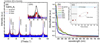 |
Fig. 1 Structural and optical stability assessment of CZOS/LAO(001) thin films under 80% RH at room temperature at different aging times: (a) XRD patterns, (b) UV–Vis absorbance spectra, and (c) optical bandgap values extracted from Tauc plot analysis. |
3.2 Combined humidity–temperature stress
A common further aging test is to combine the effect of RH and temperature. In contrast to the pronounced structural degradation observed under 80% RH at room temperature, the combined exposure to temperature and humidity (80% RH at 80°C) results in a markedly different aging behavior. It should be noted that the temperature was applied locally to the sample, whereas the chamber atmosphere was maintained under 80% RH. As shown in Figure 2a, the XRD patterns recorded for the as-grown film and after 30 days of humid-thermal exposure remain essentially unchanged, with no detectable peak shifts, peak broadening, or disappearance of CZOS peak reflections. Elevated temperature effectively suppresses humidity-driven structural degradation, consistent with observations reported for WO3 thin films aged under combined high humidity and temperature conditions [39]. Indeed, at elevated temperature, water adsorption is strongly reduced, thereby limiting oxygen-assisted hydrolysis and moisture retention within the film [39].
In line with the preserved structural characteristics, the optical response of the films shows only limited evolution with aging time. The absorbance spectra (Fig. 2b) exhibit much more limited variations in amplitude, and there is no noticeable shift of the absorption edge (note the different scale compared with Fig. 1b). The optical bandgap values extracted from the Tauc plot (Figure 2c and Fig. S2b of SI) display a non-significant increase of approximately 0.01 eV over 240 h of exposure, a variation comparable to the experimental uncertainty of the measurement. Throughout the aging period, the bandgap remains within the range expected for the oxysulfide phase, with no indication of a transition toward oxide phase or ternary sulfites. In our setup, the heating was applied locally through a hot plate under the sample rather than heating the water vapor. This probably elevated the film surface temperature over the chamber atmosphere, which reduced the amount of adsorbed water on the surface. In line with the recent BZS study, which showed that degradation starts with favorable water adsorption and then proceeds through oxidation of surface S2-, the reduced interfacial water coverage in our configuration likely suppressed this initial sulfur-oxidation pathway [23]. Thus, the non-observable degradation at 80% RH and 80°C can be attributed to limited water adsorption on the CZOS surface. To further confirm this result, we also performed the same test on an optimized sample with a bandgap of ∼2.2 eV, for which no observable degradation was detected up to 150 h, further supporting our initial conclusion. As discussed in the next section, the relatively low temperature of 80°C is not sufficient to induce significant changes in the films, in agreement with previous observations in other chalcogenide perovskite thin films under similar aging conditions [24].
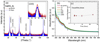 |
Fig. 2 Structural and optical evolution of CZOS/LAO(001) thin films under 80% RH at 80°C: (a) XRD patterns recorded for the as-grown film and after 30 days of exposure, (b) corresponding UV–Vis absorbance spectra measured as a function of aging time, and (c) optical bandgap values versus exposure time. |
3.3 Thermal annealed assessment
Figure 3 presents the thermal stability assessment of CZOS thin films exposed to air annealing over a temperature range from 60°C up to 650°C, with each annealing step maintained for 1 h. The XRD patterns shown in Figure 3a indicate that the film retains its crystalline structure up to 350 °C, with no significant changes in peak position or the area under the peak, similar to the behavior reported for BaZrS3 [40], which remains phase-stable when annealed between 200 °C and 400 °C under ambient conditions. This thermal resilience in both materials is attributed to the strong Zr-S bonds (Do = 546 kJ/mol), which are nearly three times stronger than the Pb-I bonds (Do = 197 kJ/mol) present in lead-halide perovskites, making both chalcogenide perovskites far more resistant to thermal degradation [31]. At 450°C, a high-angle shift of 0.8° in the (220) diffraction peak is observed, accompanied by an integrated area drop by a factor of two, which aligns with the CZO oxide phase (ICDD No. 00-035-0790). Upon further heating to 650°C, the XRD peaks are nearly extinguished, with no detectable signatures of either CZS or CZO phases, indicating severe structural degradation and loss of crystallinity. These structural changes are corroborated by SEM-EDS compositional analysis (shown in Figure S4). In the as-grown film, Ca, Zr, O and S are present in the film with a ratio of 1:0.93:1.17:1.83, confirming the stoichiometry of the oxy-chalcogenide phase. However, after annealing at 450°C, the S content drops sharply by half, with increased O content. At 600°C, S and other elements are no longer detected. These compositional changes align with the structural transformation observed in XRD and confirm the transformation of the CZOS oxysulfide phase into CaZrO茣 oxide phase and the eventual loss of the active film. A similar annealing study was also carried out on the optimized sample with a bandgap of ∼2.2 eV, which shows the same overall degradation pathway, starting above 300°C and the film essentially vanishes at 600°C.
To further assist in identifying the aging pathway, the optical analysis in Figures 3b and 3c complements the structural and compositional findings obtained from XRD and EDX. The CZOS film maintains a stable optical bandgap of ∼3.2 eV up to 350°C, as extracted from the Tauc plots (Fig. S2c), indicating that the structure remains largely preserved within this temperature range. Upon increasing the temperature from 350°C to 550°C, the bandgap gradually rises to nearly 5.0 eV, suggesting the oxide phase formation. At 600°C, the bandgap reaches approximately 5.5 eV, consistent with optical dominance of the underlying LAO substrate [37]. This clear trend supports the conclusion that the active layer undergoes complete structural and functional degradation at elevated temperatures. Still, the fact that the CZOS films are stable up to 350°C indicates that many intermediate-temperature post-deposition processes can be performed on this material and that the effect of heating under exposure to solar illumination should not degrade the material.
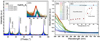 |
Fig. 3 Structural and optical evolution of CZOS/LAO(001) thin films upon thermal annealing in air up to 650°C: (a) XRD patterns of the as-grown and annealed samples, (b) UV–Vis absorbance spectra, and (c) optical bandgap values as a function of annealing temperature. |
3.4 Photostability under continuous illumination
We now study the effect of solar-like illumination on the samples. The XRD patterns recorded as a function of exposure time (up to 125 h; Fig. 4a) show no detectable shift of the CZOS (220) and (440) diffraction peaks after illumination, indicating no change in out-of-plane spacing. In particular, the invariance of the 2θ positions confirms that light exposure does not induce significant lattice expansion or structure transformation into intermediate or secondary phases. A gradual reduction in crystallinity is nevertheless observed, as indicated by a decrease in the apparent crystallite size from 5.0 ± 0.21 to 3.8 ± 0.11 nm. This evolution suggests the development of localized structural disorder or microstrain within the crystalline domains while preserving the overall crystal structure [41]. Regarding the optical properties, the absorption edge position remains essentially unchanged, with only subtle intensity variations at low wavelengths over 125 h, as shown in Figure 4b. The optical bandgap extracted from the Tauc plot (Fig. 4c) remains constant at approximately 3.20 eV throughout the exposure period, indicating that photo-induced structural changes do not significantly affect the electronic band structure. Overall, these results confirm that exposure to light (1 sun) in dry air does not induce detectable structural or optical degradation of the CZOS perovskite thin films within the investigated time scale.
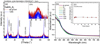 |
Fig. 4 Structural and optical stability of CZOS/LAO(001) thin films under continuous illumination (100 mW/cm2) in air at room temperature: (a) XRD patterns recorded for the as-grown film and after 125 h of light exposure, (b) corresponding UV–Vis absorbance spectra measured as a function of illumination time, and (c) optical bandgap values versus exposure time. |
3.5 Stability against ambient conditions
We now monitor the evolution of the films under ambient storage conditions, representing typical on-desk exposure without environmental control. The CZOS thin films exhibited outstanding structural and optical stability over a prolonged period of 28 days. As shown in Figure 5a, the diffraction patterns of the as-grown film and the film after 28 days largely overlap, with the CZOS (220) and (440) reflections remaining at the same positions. Only a slight reduction of around 16% in integrated area is observed; however, this variation is not significant and can be attributed to minor differences in sample positioning and alignment during XRD measurements. Similar ambient stability has been established for BaZrS3, with no detectable structural change observed after exposure to air for 10 days. In both cases, the high ambient stability is attributed to the relatively strong metal–chalcogen bonds. Measurements of the absorbance (Fig. 5b) further confirm this stability, showing a closely invariant optical bandgap of ∼3.20 eV throughout the exposure period (Fig. 5c). This consistent optical response indicates that the CZOS lattice maintains its electronic structure even under prolonged ambient exposure. It is also worth noting that the film with a thickness of 33.8 nm described in this part does not show the additional absorption edge observed in thicker films, indicating that this feature is likely due to thickness-dependent optical transitions of the film [42]. When stored under vacuum conditions, the films retained their structural and optical properties even after 335 days, with no detectable change in diffraction peak positions, as shown in Figure S4. This result provides further evidence of the remarkable long-term stability of CZOS and its strong resistance to atmospheric degradation. In contrast, hybrid halide perovskites such as MAPbI3 or FAPbI3 typically degrade within tens of hours under ambient conditions due to hydrolysis and organic component volatilization [43,44]. The high stability of CZOS is primarily attributed to its strong metal–chalcogen bonding and the absence of organic constituents, which effectively limit water adsorption and suppress degradation pathways such as hydrolysis and ion migration.
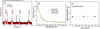 |
Fig. 5 Structural and optical evolution of CZOS/LAO(001) thin films under ambient condition: (a) XRD patterns recorded for the as-grown film, and after 2 and 3 weeks of exposure, (b) corresponding UV–Vis absorbance spectra measured as a function of aging time, and (c) optical bandgap values versus exposure time. |
3.6 Quantitative evaluation of absorbance stability
To further assess the environmental aging of CZOS films, time-dependent evolution of their optical properties was quantitatively analyzed under different external stress conditions. In Figure 6, the normalized absorbance (ΔA = A(λ, time)/A(λ, time = 0)) was evaluated at specific wavelengths near the optical band edge (corresponding to 3.2 eV for CZOS and 1.6 eV for MAPI) corresponding to their principal electronic transitions. MAPI films exhibit a rapid decrease in normalized absorbance, losing approximately 25% within 24 h [45]. In contrast, the CZOS thin film maintains more than 95% of its initial optical response even after 100 h of continuous exposure.
The evolution of normalized absorbance of CZOS under thermal, illumination, and combined humidity–temperature conditions is summarized in Figure S6. Under thermal annealing, the normalized absorbance remains essentially unchanged up to 200°C, followed by a gradual reduction beyond 350°C and a more pronounced decrease above 400°C. This confirms that CZOS maintains both its structural and optical integrity up to around 350°C, highlighting remarkable thermal stability that is highly promising for a wide range of applications. Under continuous illumination, the normalized absorbance near the band edge remains effectively constant (ΔA ∼ 1) for more than 120 h, confirming excellent photostability. Even under combined humidity–temperature stress, the films maintain high absorbance stability up to 200°C, with only moderate losses at elevated temperatures; notably, nearly 70% of the initial absorbance is preserved after exposure to 500°C. These quantitative results are in line with the chemical composition, structural, and bandgap evolution analyses, collectively confirming the relatively good environmental stability of CZOS compared with MAPI. This superior durability arises from its robust metal–chalcogen bonding and fully inorganic compositions, which effectively mitigate susceptibility to hydrolysis and oxidation processes that commonly undermine the long-term stability of halide perovskites [46,47].
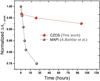 |
Fig. 6 Time-dependent evolution of the normalized peak absorbance at 350 nm for CZOS thin films during aging at 80% RH, compared with MAPI perovskite reference data reported by Bahtiar et al. [45]. |
4 Conclusion
In conclusion, we systematically investigate the most common degradation pathways affecting thin films, including humidity, combined humidity–temperature stress, elevated temperature, illumination, and ambient storage. The results reveal that CZOS thin films maintain both structural and optical integrity up to 350°C, with no detectable phase transformation or morphological degradation. When exposed to 80% humidity, the films remain stable for several days before gradually transforming into an oxide phase after approximately 10 days. The material's stability is further confirmed by optical absorption measurements; the normalized absorbance remains above 0.9 even after 90 h under humid conditions, whereas conventional hybrid perovskites such as MAPI exhibit significant optical loss and degradation within only a few hours under similar conditions. Overall, these results demonstrate the strong environmental and thermal stability of CZOS thin films, highlighting their potential as durable and intrinsically stable photoactive materials. Future efforts should focus on fabricating and testing complete solar cell devices, as well as on assessing operational stability under continuous illumination, thermal stress, and electrical bias, to further validate the long-term performance and reliability of this oxy-sulfide perovskite system.
Acknowledgments
We acknowledge the Ministry of Education in Saudi Arabia for funding the PhD candidate. The authors also gratefully acknowledge Dr S. Fall for his assistance with the illumination test setup. We further acknowledge the XRD platform of IPCMS and Dr. M. Lenertz for their technical support, and S. Roques and J. Bartringer for their technical support. This work was partially funded under the framework of the IdEx University of Strasbourg.
Funding
This research was partially funded by Strasbourg University, through the project IdEx.
Conflicts of interest
The authors have nothing to disclose.
Data availability statement
Data associated with this article are provided in the supplementary information.
Author contribution statement
Hussain Althubyani: Conceptualization, Methodology, Formal analysis, Preparation, Writing—Original Draft.
Walid Couif: Methodology, Formal analysis, Investigation.
Patrick Pearson: Discussion, Validation, Writing—Review & Editing.
Aziz Dinia: Project Administration, Writing—Review & Editing.
Thomas Fix: Validation, Resources, Visualization, Supervision, Writing—Review & Editing, Project Administration, Funding Acquisition.
Supplementary Material
The real and imaginary part of dielectric function, The extinction coefficient, The bandgap estimated from Tauc plot, The SEM scan and corresponding EDS analysis, XRD data, Time-dependent evolution of the normalized peak absorbance.
Fig. S1. (a) Experimental and fitted real and imaginary dielectric constant spectra, determined by spectroscopic ellipsometry (SE). (b) the extracted extinction coefficient (k) of CZOS thin film under the humidity test within the time period of 0–96 h.
Fig. S2. The bandgap estimated from the Tauc plot under (a) 80% RH, (b) temperature, (c) illumination, and (d) combined humidity–temperature. The bold linear segments show the fitting windows used for bandgap extraction.
Fig. S3. (a) SEM scan of CZOS thin film after 30 days under humidity test. (b) corresponding EDS analysis.
Fig. S4. SEM scans and corresponding EDS of CZOS film under temperature stress: (a) as-grown, (b) 450 °C, and (c) 600 °C.
Fig. S5. Room temperature XRD of CZOS stored in vacuum for 335 days.
Fig. S6. Time-dependent evolution of the normalized peak absorbance of CZOS film under (a) combined humidity-temperature, (b) temperature, (c) illumination.
Table S1. The fitting parameters of CZOS thin film extracted from SE. Phase 1 and 2 refer to sulfur-rich and oxide-rich phases, respectively.
Table S2. Summary of the CZOS thin films used in the different aging experiments, including the test condition, film thickness extracted via ellipsometry, and as-grown optical bandgap.
Access Supplementary MaterialReferences
- M. Ahmadi, T. Wu, B. Hu, A review on organic–inorganic halide perovskite photodetectors: device engineering and fundamental physics, Adv. Mater. 29, 1605242 (2017).https://doi.org/10.1002/adma.201605242 [Google Scholar]
- Q. Van Le, H.W. Jang, S.Y. Kim, Recent advances toward high-efficiency halide perovskite light-emitting diodes: review and perspective, Small Methods 2, 1700419 (2018). https://doi.org/10.1002/smtd.201700419 [Google Scholar]
- A. Kojima, K. Teshima, Y. Shirai, T. Miyasaka, Organometal halide perovskites as visible-light sensitizers for photovoltaic cells, J. Am. Chem. Soc. 131, 6050 (2009). https://doi.org/10.1021/ja809598r [CrossRef] [PubMed] [Google Scholar]
- S.D. Stranks, H.J. Snaith, Metal-halide perovskites for photovoltaic and light-emitting devices, Nat. Nanotechnol. 10, 391 (2015). https://doi.org/10.1038/nnano.2015.90 [Google Scholar]
- W. Zhang, G.E. Eperon, H.J. Snaith, Metal halide perovskites for energy applications, Nat. Energy 1, 16048 (2016). https://doi.org/10.1038/nenergy.2016.48 [Google Scholar]
- Y. Shao, Y. Fang, T. Li, Q. Wang, Q. Dong, Y. Deng et al., Grain boundary dominated ion migration in polycrystalline organic-inorganic halide perovskite films, Energy Environ. Sci. 9, 1752 (2016). https://doi.org/10.1039/c6ee00413j [Google Scholar]
- P.V. Kamat, ACS journals celebrate 10 years of perovskite photovoltaics, ACS Energy Lett. 4, 1055 (2019). https://doi.org/10.1021/acsenergylett.9b00609 [Google Scholar]
- D. Bryant, N. Aristidou, P. Pont, I. Sanchez-Molina, T. Chotchunangatchaval, S. Wheeler et al., Light and oxygen induced degradation limits the operational stability of methylammonium lead triiodide perovskite solar cells, Energy Environ. Sci. 9, 1655 (2016). https://doi.org/10.1039/c6ee00409a [Google Scholar]
- N. Li, X. Niu, Q. Chen, H. Zhou, Towards commercialization: The operational stability of perovskite solar cells, Chem. Soc. Rev. 49, 8235 (2020). https://doi.org/10.1039/d0cs00573h [Google Scholar]
- F. Palazon, D. Pérez-Del-Rey, S. Marras, M. Prato, M. Sessolo, H.J. Bolink et al., Coating evaporated MAPI thin films with organic molecules: Improved stability at high temperature and implementation in high-efficiency solar cells, ACS Energy Lett. 3, 835 (2018). https://doi.org/10.1021/acsenergylett.8b00193 [Google Scholar]
- D.W. DeQuilettes, W. Zhang, V.M. Burlakov, D.J. Graham, T. Leijtens, A. Osherov et al., Photo-induced halide redistribution in organic-inorganic perovskite films, Nat. Commun. 7, 11683 (2016). https://doi.org/10.1038/ncomms11683 [Google Scholar]
- E.T. Hoke, D.J. Slotcavage, E.R. Dohner, A.R. Bowring, H.I. Karunadasa, M.D. McGehee, Reversible photo-induced trap formation in mixed-halide hybrid perovskites for photovoltaics, Chem. Sci. 6, 613 (2015). https://doi.org/10.1039/c4sc03141e [Google Scholar]
- D.A. Egger, L. Kronik, Role of dispersive interactions in determining structural properties of organic-inorganic halide perovskites: Insights from first-principles calculations, J. Phys. Chem. Lett. 5, 2728 (2014). https://doi.org/10.1021/jz5012934 [Google Scholar]
- C. Motta, F. El-Mellouhi, S. Kais, N. Tabet, F. Alharbi, S. Sanvito, Revealing the role of organic cations in hybrid halide perovskite CH3NH3PbI3, Nat. Commun. 6, 7026 (2015). https://doi.org/10.1038/ncomms8026 [Google Scholar]
- M. Buffiere, D.S. Dhawale, F. El-Mellouhi, Chalcogenide materials and derivatives for photovoltaic applications, Energy Technol. 7, 1900819 (2019). https://doi.org/10.1002/ente.201900819 [Google Scholar]
- A. Swarnkar, W.J. Mir, R. Chakraborty, M. Jagadeeswararao, T. Sheikh, A. Nag, Are chalcogenide perovskites an emerging class of semiconductors for optoelectronic properties and solar cell?, Chem. Mater. 31, 565 (2019). https://doi.org/10.1021/acs.chemmater.8b04178 [Google Scholar]
- D. Tiwari, O.S. Hutter, G. Longo, Chalcogenide perovskites for photovoltaics: Current status and prospects, J. Phys. Energy 3, 034010 (2021). https://doi.org/10.1088/2515-7655/abf41c [Google Scholar]
- S. Perera, H. Hui, C. Zhao, H. Xue, F. Sun, C. Deng et al., Chalcogenide perovskites—an emerging class of ionic semiconductors, Nano Energy 22, 129 (2016). https://doi.org/10.1016/j.nanoen.2016.02.020 [Google Scholar]
- R.L.Z. Hoye, J. Hidalgo, R.A. Jagt, J.P. Correa-Baena, T. Fix, J.L. MacManus-Driscoll, The role of dimensionality on the optoelectronic properties of oxide and halide perovskites, and their halide derivatives, Adv. Energy Mater. 12, 2100499 (2022). https://doi.org/10.1002/aenm.202100499 [Google Scholar]
- R. Raj, R. Singh, M. Guin, Chalcogenide perovskite, an emerging photovoltaic material: Current status and future perspectives, ChemistrySelect 8, e202303550 (2023). https://doi.org/10.1002/slct.202303550 [Google Scholar]
- M. Surendran, S. Singh, H. Chen, C. Wu, A. Avishai, Y.T. Shao et al., A hybrid pulsed laser deposition approach to grow thin films of chalcogenides, Adv. Mater. 36, 2312620 (2024). https://doi.org/10.1002/adma.202312620 [Google Scholar]
- T. Gupta, D. Ghoshal, A. Yoshimura, S. Basu, P.K. Chow, A.S. Lakhnot et al., An environmentally stable and lead-free chalcogenide perovskite, Adv. Funct. Mater. 30, 2001387 (2020). https://doi.org/10.1002/adfm.202001387 [Google Scholar]
- J. Meng, Z. Lan, Aqueous instability of the chalcogenide perovskite BaZrS3, Nano Lett. 26, 197 (2026). https://doi.org/10.1021/acs.nanolett.5c04899 [Google Scholar]
- V.K. Ravi, S.H. Yu, P.K. Rajput, C. Nayak, D. Bhattacharyya, D.S. Chung et al., Colloidal BaZrS3 chalcogenide perovskite nanocrystals for thin film device fabrication, Nanoscale 13, 1616 (2021). https://doi.org/10.1039/d0nr08078k [Google Scholar]
- X. Song, X. Shai, S. Deng, J. Wang, J. Li, X. Ma et al., Anisotropic chalcogenide perovskite CaZrS3: A promising thermoelectric material, J. Phys. Chem. C 126, 11751 (2022). https://doi.org/10.1021/acs.jpcc.2c02286 [Google Scholar]
- Md. Z. Rahman, S.S. Hasan, Md.Z. Hasan, Md. Rasheduzzaman, Md.A. Rahman, Md.M. Ali et al., Insight into the physical properties of the chalcogenide XZrS3 (X = Ca, Ba) perovskites: A first-principles computation, J. Electron. Mater. 53, 3775 (2024). https://doi.org/10.1007/s11664-024-11120-x [Google Scholar]
- H. Labrim, Y. Selmani, S. Ziti, S. Idrissi, R. El Bouayadi, D. Zejli et al., Study of the perovskites CaZrO3 − xSx (x = 0, 1, 2 and 3) for photovoltaic applications, Solid State Commun. 363, 115105 (2023). https://doi.org/10.1016/j.ssc.2023.115105 [Google Scholar]
- P. Zhao, L. Yang, S. Kong, H. Hui, L. Samson, K. Guo et al., Impact of sulfurization temperature on the formation and properties of chalcogenide perovskites, Molecules 30, 1198 (2025). https://doi.org/10.3390/molecules30061198 [Google Scholar]
- A. Clearfield, The synthesis and crystal structures of some alkaline earth titanium and zirconium sulfides, Acta Crystallogr. 16, 135 (1963). https://doi.org/10.1107/s0365110x6300030x [Google Scholar]
- H. Althubyani, D. Stoeffler, J. Bartringer, S. Roques, D. Ihiawakrim, A. Dinia et al., Investigation of CaZrO3 − xSx oxysulfide perovskite thin films grown by pulsed laser deposition, J. Phys. Energy 8, 015034 (2026). https://doi.org/10.1088/2515-7655/ae52b5 [Google Scholar]
- R. Bystrický, S.K. Tiwari, P. Hutár, M. Sýkora, Thermal stability of chalcogenide perovskites, Inorg. Chem. 63, 12826 (2024). https://doi.org/10.1021/acs.inorgchem.4c01308 [Google Scholar]
- X. Wei, H. Hui, C. Zhao, C. Deng, M. Han, Z. Yu et al., Realization of BaZrS3 chalcogenide perovskite thin films for optoelectronics, Nano Energy 68, 104317 (2020). https://doi.org/10.1016/j.nanoen.2019.104317 [Google Scholar]
- U.U. Rehman, K.U. Sahar, K. Mahmood, E. Hussain, C.M. Wang, Exploring the potential of non-toxic chalcogenide-based perovskite solar cells: Performance analysis and insights, Inorg. Chem. Commun. 174, 113923 (2025). https://doi.org/10.1016/j.inoche.2025.113923 [Google Scholar]
- H.I. Alkhammash, M.A. Islam, Enhanced performance of CaZrS3-based chalcogenide perovskite solar cells (CPSC): A theoretical study on optimization of hole transport material, Jpn. J. Appl. Phys. 63, 121006 (2024). https://doi.org/10.35848/1347-4065/ad9977 [Google Scholar]
- G.E. Jellison, F.A. Modine, Parameterization of the optical functions of amorphous materials in the interband region, Appl Phys Lett. 69, 371 (1996). https://doi.org/10.1063/1.118064 [Google Scholar]
- K. Hkiri, H.E.A. Mohamed, B.S. Khanyile, C. Mtshali, M. Nkosi, M. Ben Salem et al., Deposition of CaZrO3 thin films by EB-PVD: Effects of substrate on the composition, the structure, the morphology and the optical properties, Surf. Interfaces 25, 101259 (2021). https://doi.org/10.1016/j.surfin.2021.101259 [Google Scholar]
- M. Rizwan, S. Gul, T. Iqbal, U. Mushtaq, M.H. Farooq, M. Farman et al., A review on perovskite lanthanum aluminate (LaAlO3), its properties and applications, Mater. Res. Express 6, 122001 (2019). https://doi.org/10.1088/2053-1591/ab4629 [Google Scholar]
- P. Toloueinia, H. Khassaf, A. Shirazi Amin, Z.M. Tobin, S.P. Alpay, S.L. Suib, Moisture-induced structural degradation in methylammonium lead iodide perovskite thin films, ACS Appl. Energy Mater. 3, 8240 (2020). https://doi.org/10.1021/acsaem.0c00638 [Google Scholar]
- S. Ghosh, M.S. Ilango, C.S. Prajapati, N. Bhat, Reduction of humidity effect in WO3 thin film-based NO2 sensor using physiochemical optimization, Cryst. Res. Technol. 56, 2000155 (2021). https://doi.org/10.1002/crat.202000155 [Google Scholar]
- Y. Han, J. Xu, Y. Liang, X. Chen, M. Jia, J. Zhang et al., P-type conductive BaZrS3 thin film and its band gap tuning via Ruddlesden–Popper Ba3Zr2S7 and titanium alloying, Chem. Eng. J. 473, 145351 (2023). https://doi.org/10.1016/j.cej.2023.145351 [Google Scholar]
- G.K. Williamson, W.H. Hall, X-ray line broadening from filed aluminium and wolfram, Acta Metall. 1, 22 (1953). https://doi.org/10.1016/0001-6160(53)90006-6 [Google Scholar]
- M.G. Krishna, A.K. Bhattacharya, Effect of thickness on the optical absorption edge of sputtered vanadium oxide films, Mater. Sci. Eng. B 49, 166 (1997). https://doi.org/10.1016/S0921-5107(97)00128-1 [Google Scholar]
- A. Senocrate, G.Y. Kim, M. Grätzel, J. Maier, Thermochemical stability of hybrid halide perovskites, ACS Energy Lett. 4, 2859 (2019). https://doi.org/10.1021/acsenergylett.9b01605 [Google Scholar]
- Q. Fu, X. Tang, B. Huang, T. Hu, L. Tan, L. Chen et al., Recent progress on the long-term stability of perovskite solar cells, Adv. Sci. 5, 1700387 (2018). https://doi.org/10.1002/advs.201700387 [Google Scholar]
- A. Bahtiar, K. Habibie, The stability studies of mixed halide perovskite CH3NH3PbBrxI3 − x thin films in ambient with air humidity 70% using UV–Vis spectroscopy and X-ray diffraction, Spektra 5, 109 (2020). https://doi.org/10.21009/SPEKTRA.052.03 [Google Scholar]
- T.A. Berhe, W.N. Su, C.H. Chen, C.J. Pan, J.H. Cheng, H.M. Chen et al., Organometal halide perovskite solar cells: Degradation and stability, Energy Environ. Sci. 9, 323 (2016). https://doi.org/10.1039/c5ee02733k [Google Scholar]
- K. Gahlot, L. di Mario, R. Bosma, M.A. Loi, L. Protesescu, Air-stable thin films of tin halide perovskite nanocrystals by polymers and Al2O3 encapsulation, Chem. Mater. 36, 11227 (2024). https://doi.org/10.1021/acs.chemmater.4c02261 [Google Scholar]
Cite this article as: Hussain Althubyani, Walid Couif, Patrick Pearson, Aziz Dinia, Thomas Fix, Environmental aging of CaZrO3-xSx oxychalcogenide perovskite thin films, EPJ Photovoltaics 17, 26 (2026), https://doi.org/10.1051/epjpv/2026019
All Figures
|
Fig. 1 Structural and optical stability assessment of CZOS/LAO(001) thin films under 80% RH at room temperature at different aging times: (a) XRD patterns, (b) UV–Vis absorbance spectra, and (c) optical bandgap values extracted from Tauc plot analysis. |
| In the text | |
|
Fig. 2 Structural and optical evolution of CZOS/LAO(001) thin films under 80% RH at 80°C: (a) XRD patterns recorded for the as-grown film and after 30 days of exposure, (b) corresponding UV–Vis absorbance spectra measured as a function of aging time, and (c) optical bandgap values versus exposure time. |
| In the text | |
|
Fig. 3 Structural and optical evolution of CZOS/LAO(001) thin films upon thermal annealing in air up to 650°C: (a) XRD patterns of the as-grown and annealed samples, (b) UV–Vis absorbance spectra, and (c) optical bandgap values as a function of annealing temperature. |
| In the text | |
|
Fig. 4 Structural and optical stability of CZOS/LAO(001) thin films under continuous illumination (100 mW/cm2) in air at room temperature: (a) XRD patterns recorded for the as-grown film and after 125 h of light exposure, (b) corresponding UV–Vis absorbance spectra measured as a function of illumination time, and (c) optical bandgap values versus exposure time. |
| In the text | |
|
Fig. 5 Structural and optical evolution of CZOS/LAO(001) thin films under ambient condition: (a) XRD patterns recorded for the as-grown film, and after 2 and 3 weeks of exposure, (b) corresponding UV–Vis absorbance spectra measured as a function of aging time, and (c) optical bandgap values versus exposure time. |
| In the text | |
|
Fig. 6 Time-dependent evolution of the normalized peak absorbance at 350 nm for CZOS thin films during aging at 80% RH, compared with MAPI perovskite reference data reported by Bahtiar et al. [45]. |
| In the text | |
Current usage metrics show cumulative count of Article Views (full-text article views including HTML views, PDF and ePub downloads, according to the available data) and Abstracts Views on Vision4Press platform.
Data correspond to usage on the plateform after 2015. The current usage metrics is available 48-96 hours after online publication and is updated daily on week days.
Initial download of the metrics may take a while.