


| Issue |
EPJ Photovolt.
Volume 17, 2026
|
|
|---|---|---|
| Article Number | 21 | |
| Number of page(s) | 10 | |
| DOI | https://doi.org/10.1051/epjpv/2026013 | |
| Published online | 13 May 2026 | |
https://doi.org/10.1051/epjpv/2026013
Original Article
Agrivoltaics in practice: forms and drivers of conflicts
1
Univ. Grenoble Alpes, CNRS, Grenoble INP, G2Elab, 21 Av. des Martyrs, 38000 Grenoble, France
2
Univ. Grenoble Alpes, CNRS, Grenoble INP, ISTerre, 1381 Rue de la Piscine, 38610 Gières, France
* e-mail: This email address is being protected from spambots. You need JavaScript enabled to view it.
Received:
30
November
2025
Accepted:
15
April
2026
Published online: 13 May 2026
Abstract
Agrivoltaics has been expanding rapidly in France, but its deployment is accompanied by increasing public controversy. France represents a particularly relevant case due to its advanced regulatory framework, making it a useful laboratory for anticipating future conflicts in other countries. Drawing on an original database of 292 agrivoltaic projects, including 65 that have given rise to conflicts, this study analyses the nature and determinants of these oppositions. The results show that installed capacity is a significant factor: large-scale projects are more frequently contested. Conversely, the type of technology does not, overall, influence whether a project becomes contested. A qualitative analysis of 68 documents covering 54 cases of conflict identifies six different categories of conflicts. Most conflicts appear to be multifactorial. The study thus highlights that agrivoltaic controversies extend far beyond the agronomic issues traditionally anticipated and that these dimensions must be integrated into the design strategies governing agrivoltaics.
Key words: Agrivoltaics / conflicts / technologies / database / statistical analysis
© Z. Zerbib et al., Published by EDP Sciences, 2026
 This is an Open Access article distributed under the terms of the Creative Commons Attribution License (https://creativecommons.org/licenses/by/4.0), which permits unrestricted use, distribution, and reproduction in any medium, provided the original work is properly cited.
1 Introduction
Agrivoltaics is a technology that combines photovoltaic energy production with agriculture. While the technical and financial maturity of photovoltaics is well established, scaling it up to levels sufficient to meet national energy needs is more complex, largely because of the significant land requirements involved. This is where its association with agriculture comes into play: agrivoltaics promises to grant access to agricultural land while simultaneously providing services to farming—particularly through the provision of shade. The underlying idea is to combine two sectors, with one expected to help address the challenges faced by the other.
The issue of conflicts arising from the deployment of agrivoltaics is central to our inquiry. In the domain of social conflict, the territorialization of a technological innovation confronts two main risks: disappointing the expectations it has generated (in this case, by having a significant negative impact on agricultural production) and generating additional, poorly anticipated conflicts. This is especially true when a technology impacts multiple sectors: rather than resolving existing tensions in one sector through contributions from the other, it may instead amplify them. Our central question, therefore, is whether agrivoltaics helps reduce expected tensions between agricultural production and energy generation or whether, on the contrary, it generates new ones.
We analyze the results derived from a database on agrivoltaics in France. This database—assembled by the authors following open science principles—documents 292 agrivoltaic projects, 65 of which have given rise to conflict. By comparing, through a review of the scientific literature and relevant legal texts, the anticipated conflicts surrounding agrivoltaics with those observed in the database, we show that although agrivoltaics is spreading widely, its deployment is not exempt from unanticipated conflicts that, as hypothesized, extend far beyond the issue of shading and more fundamentally raise the question of access to land.
2 What conflicts structure agrivoltaics?
In this study, “controversy” refers to scientific debates about agrivoltaics within scientific, technical, and legal arenas, in line with Science and Technology Studies [1–3]. On the other hand, the term “conflict” is used for localized disputes arising from project implementation. New knowledge and arguments developed during these conflicts can be mobilized to fuel national controversies about agrivoltaics.
Originating in agronomic research institutions in the 1980s [4], agrivoltaics was initially conceived as a way to generate co-benefits between agricultural production and energy generation: the aim is to provide crops with protection from weather events, particularly sunlight and hail, while making land available for photovoltaics. Agrivoltaics truly began to expand when access to land for solar energy production became a crucial issue for the energy transition: brownfields, rooftops, and parking lots were insufficient to allow for large-scale deployment of photovoltaics—especially at regulated tariffs—making agricultural land a strategic resource. Thus, while providing services to both agriculture and energy production lies at the heart of the agrivoltaic promise, this promise is not exempt from land-related risks. These risks were anticipated and have given rise to substantial technical and legal work, which we first summarize before proposing, based on the literature, an analytical framework for the conflicts actually observed.
2.1 Managing the competition for light on the plot
Competition for sunlight has shaped much of the scientific literature, which seeks to determine under what conditions photovoltaic panels can coexist with crops without reducing their productivity. Several avenues have been explored to limit this competition. The first approach relies on modifying the design of agrivoltaic installations. Modeling studies have highlighted the influence of panel coverage ratios [5,6] or panel orientation on light distribution [7]. Similarly, crop choice constitutes another lever: certain horticultural crops, such as lettuce, are more tolerant of shading [8].
Another line of research focuses on controllable technologies. Panels mounted on trackers make it possible to modulate shading according to the sun’s trajectory or the specific needs of crops at a given moment. This would allow both an increase in the electrical performance of the installation [7,9] and the development of control strategies to limit the impact of shading on crops [10], or even to protect them from adverse weather events [11]. Innovation also concerns photovoltaic technologies themselves—semi-transparent panels, concentrators [12], or organic films [13]—which modify the amount and spectrum of radiation transmitted to plants [14].
While these technological advances reflect a desire to reduce potential conflicts between agriculture and energy production, technology alone cannot regulate the expansion of agrivoltaics. Hence the need for a legal framework, which France has notably anticipated. The Act on the Acceleration of Renewable Energies1 and its implementing decrees aim to regulate the development of agrivoltaics by defining the services that these installations must provide to agricultural activity. Several technical criteria have been established to ensure the primacy of agricultural land use. They define, for instance, the maximum loss of cultivable area, the surface coverage ratio, and crop productivity levels [15]. The regulation also distinguishes between so-called “proven” technologies2, which may benefit from a more flexible framework.
Nevertheless, these criteria remain focused on the relationship between agriculture and electricity production. The regulation established by the APER Act, as well as the prior case law, does not take landscape aspects or ecological issues into account [16], even though these are recurrent sources of conflict in agrivoltaic projects. Ongoing parliamentary debates3 reflect persistent uncertainties regarding the desirable development model for the sector. Indeed, the social science literature shows that agrivoltaic-related conflicts are numerous, even in the French context, where the intention to anticipate them was explicit.
2.2 Controversies that extend beyond agricultural issues
Agrivoltaic projects also give rise to mobilizations rooted in concerns about landscape integration and, more broadly, in divergent conceptions of energy and agricultural transitions. These oppositions are sometimes interpreted through a NIMBY (Not In My Back Yard) lens, reducing local mobilizations to local and conservative reactions. As a result, part of the scientific literature seeks to identify the drivers of social acceptance of agrivoltaics [17–19] through better landscape integration [20,21], design practices [22,23], participatory mechanisms [24], contributions to local economies [25], or issues of energy justice [26].
These approaches have nonetheless been criticized for treating conflicts as obstacles to be removed through various methods [27,28]. Authors of these critiques emphasize that local opposition reflects multiple forms of attachment [29]. Many social science scholars argue that landscape-related conflicts allow local actors to question the territorial relevance of projects promoted in the name of the energy transition [30]. A lack of social acceptance thus becomes symptomatic of a broader relationship to the transition and the societal project that accompanies it [27].
These critiques—well established in the field of social acceptance—take on a particular meaning in the agricultural sector. Since the early 2000s, agriculture has been identified both as a major emitter of greenhouse gases and as one of the activities most vulnerable to climate change impacts [31,32]. This national context, combined with the substantial land requirements of renewable energy, has led to the development of energy projects on agricultural land (biomass, onshore wind, and agrivoltaics). However, a-territorial greenhouse gas reduction targets—defined in national or supranational energy planning—often clash with the environmental consequences of energy projects in local territories (biodiversity protection, soil artificialization, pollution control, etc.). Agrivoltaics appears to revive longstanding agricultural debates on land sharing and land sparing [33]. While it is often presented as a way to combine multiple objectives on the same parcel, it may nonetheless lead to reduced efficiency in both agricultural and energy productions. Agrivoltaics could intensify production pressures in certain territories, giving local residents the impression that they live in areas sacrificed to both intensive agricultural and energy-related productions [34,35].
Moreover, controversies revolve around differing, or even antagonistic, visions of energy, agricultural, and ecological transitions. The agricultural sector thus becomes the stage for “Green on Green” conflicts—controversies in which the imperatives of the energy transition come into contradiction with other ecological concerns [36,37]. Opponents of agrivoltaics reject what they see as the “energization of agriculture”, expressing fears about land speculation, transformations of tenancy systems, and disguised soil artificialization [38]. In France, the Confédération paysanne—a farmers’ union defending a peasant and territorial vision of agriculture—is a central actor in this opposition [39]. It emphasizes the preservation of farmland and the symbolic and productive value of soil and denounces the appropriation of agrivoltaic projects by large corporations.
Agrivoltaics can thus give rise to a wide array of conflicts: landscape conflicts, governance issues, perceptions of social and spatial injustices, conflicts linked to the energy transition, and even conflicts related to agriculture itself. To understand which of these conflicts emerge, and in what proportions, we now present a methodology for analyzing the controversies triggered by the deployment of agrivoltaics, based on a database documenting agrivoltaic projects in mainland France.
3 A database to analyze conflicts
3.1 Methodological elements
To build this database, 20 photovoltaic developers were selected. The various sites were then identified by first reviewing the websites and social media accounts of energy companies, followed by keyword-based internet searches. The data corresponding to the identified sites are therefore openly accessible. They include:
General and technical characteristics of the projects (technology, capacity, surface area, location, year of commissioning, etc.);
Agricultural activities carried out (type of agriculture, mixed cropping, organic farming);
The economic model and legal structure of the projects;
Territorial integration (controversies, forms of self-consumption, actors involved).
To account for the diversity of crop–technology combinations being tested4, the sites included in the database were classified into six technological categories: fixed technologies (agrivoltaic greenhouses, ground-mounted agrivoltaic parks, vertical solar panels, and fixed shade structures) and controllable technologies (solar tracking and agronomic control). Particular attention was paid to differentiating between solar tracking—optimizing electrical production through panel rotation—and the “agronomic control” promoted by certain energy companies. The latter consists of alternating phases of solar tracking and anti-tracking (reducing shading to promote crop growth beneath the panels) [7,9,10], based on agronomic models and the collection and processing of meteorological and biophysical data from the agricultural plot.
The resulting database contains 292 projects, including 120 operational sites (see Fig. A.1). Sixty-five controversies were also identified online.
3.2 Defining and identifying conflicts
In order to understand forms of conflicts and when they usually arise, it might be useful to focus on the timeline of agrivoltaic projects under the APER Act, which usually unfolds over five to seven years. Projects remain mostly private during their initial stage, with developers prospecting and negotiating with farmers while conducting feasibility studies. Project bearers can sometimes request inputs from local officials and agricultural chambers.
A building permit application then triggers a public inquiry, opening a new stage where the visibility of the project in the public arena increases. Citizens are expected to voice opinions and ask questions. To regulate the debates and avoid rejections, project holders tend to organize public meetings, exhibitions, workshops, or even demonstrator’s tours.
Drawing on the results of the inquiry, state services (Direction territoriale des Territoires (DTT), Direction régionale de l'Environnement, de l'Aménagement et du Logement (DREAL), and the Departmental Commission for the Preservation of Natural, Agricultural, and Forest Areas (CDPENAF)) review the application, with the departmental prefect making the final decision. Legal appeals can be filed within two months with administrative courts, potentially escalating to the Council of State.
After permit approval, developers negotiate grid connections and financing. Construction begins, and the plant is commissioned. While legal appeals are limited to post-permit stages, opposition can arise and be publicized at any point once the project is made public.
In our study, 46 conflicts were reported during the phase in which the project was presented to the public. Six of these emerged online following legal appeals, and two conflicts were publicized during the operational phase—an outcome that may be explained by a saturation effect as the number of agrivoltaic projects increases within a territory. However, this study cannot capture low-intensity or latent conflicts that do not receive online media coverage.
A site is considered to be subject to conflicts when evidence of collective opposition to the project can be found online. Forms of opposition include the organization of resident or activist groups, demonstrations, and other collective mobilizations; the creation and management of Facebook groups; and communication actions such as statements in the local press. Opposition documented in the database comes from 36 environmental associations (including five associations opposed to several different projects), two agricultural unions (e.g., Confédération Paysanne), two local political branches, and three cases of residents being unstructured oppositions.
The same keyword-based search was applied to each site in the database to determine whether it was the subject of a conflict. This methodology has the advantage of bringing together both agrivoltaic sites whose development has generated (or may have generated) disputes and projects whose deployment appears to have been consensual (see Tab. A.1). Taken together, the dataset provides a rich resource for analyzing the diversity of conflicts accompanying the development of agrivoltaics in France.
4 Results: influence of technical characteristics and typology of conflicts
To better characterize the identified controversies, a two-stage statistical analysis was conducted. First, to describe the types of conflicts observed, we performed cross-tabulations of variables from the database, focusing in particular on the influence of installed capacity and technology type. In a second stage, we explored the different types of conflicts through a multivariate analysis.
4.1 Influence of installed capacity and technology on the distribution of controversies
Their study of a 350 MW solar farm in the United Kingdom [40] showed that the scale of energy projects influences their social acceptance. We tested this hypothesis by cross-referencing the variables observed conflict and project size5.
Logistic regression produced results (coefficient = 0.011, P = 0.018) indicating a statistically significant association and demonstrating a positive correlation: the greater the installed capacity, the higher the likelihood that a site is conflicting. Similarly, Figure 1 illustrates that the median capacity of conflicting sites (18 MWp) is twice as high as that of non-conflicting sites (9.2 MWp).
The impact of agrivoltaic technology type on whether a project becomes conflicting was also assessed. In this population, 58 agrivoltaic sites are subject to conflict. The chi-square test of independence at the 5% threshold yielded results (χ2(1) = 15.786, df = 7, P = 0.027) indicating a statistically significant association between technology type and the presence of conflicts. The test highlighted the particular behavior of agrivoltaic greenhouses, which are the object of fewer conflicts. When the same chi-square test was performed on a population excluding greenhouses, the result was no longer statistically significant (χ2(1) = 7.965, df = 6, P = 0.24). This means that only greenhouses influence whether a project becomes conflicting. This result may be explained by the relatively low landscape impact of agrivoltaic greenhouses, which differ little from conventional agricultural greenhouses—though this hypothesis requires further confirmation and could be linked to other confounding variables (size, location, date of installation, etc.).
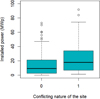 |
Fig. 1 Boxplots comparing the distribution of installed capacity between conflicting and non-conflicting agrivoltaic projects. |
4.2 Exploring the different types of conflicts
A second analysis focused on the arguments mobilized by opponents of agrivoltaic projects in order to define categories of conflicts. The qualitative analysis of a corpus of 68 documents (leaflets, petitions, local press articles, and social media posts) concerning 54 out of the 65 conflicting projects identified in the 6database enabled the construction of an analytical framework for conflict types. Through successive coding and clustering7, six categories of conflicts were identified:
Landscape conflicts: impacts on landscapes and/or heritage; negative effects on property values and/or tourism; local nuisances (noise, odors, disturbances caused by construction, etc.).
Governance conflicts: conflicts of interest; allegations of malpractice or political/financial irregularities; lack of transparency and exclusion of citizens; concerns about how the project is managed and/or about the identity of the developer.
Conflicts related to the type of agriculture: farm size and type of agriculture supported (large operations, rent-based agriculture, etc.); changes in farming practices compared with previous uses; fear of losing tenant-farming status.
Conflicts related to the type of transition: opposition to mega-projects; rejection of “techno-solutionism” and the “energization of agriculture”; concerns about disguised soil artificialization; promotion of alternative pathways perceived as more desirable; issues of energy justice.
Conflicts related to biodiversity: fears of destruction of local biodiversity (specific fauna and flora); destruction of habitats; pollution risks.
Conflicts related to land speculation: risks of land speculation; fears that young farmers will no longer be able to access land.
This framework was applied to all observed conflicting projects. The analysis revealed that only 4 of the 54 conflicts studied—i.e., 7%—involve a single type of conflict, demonstrating the highly multifactorial nature of agrivoltaic opposition.
Furthermore, a multivariate analysis (multiple correspondence analysis, MCA) combined with a hierarchical clustering on principal components (HCPC) was performed in order to identify groups of conflicts sharing similar properties (Tab. A.2). The analysis brings to light four clusters of agrivoltaic conflicts: conflicts related to landscape, transition, and biodiversity; conflicts focused on project governance; conflicts centered on the type of agriculture associated with the project; and highly multifactorial conflicts that do not involve the type of agriculture. Each category of the resulting typology is illustrated with an exemplar project (the project closest to the cluster barycenter) [41].
Transformation of territorial identity: The agrivoltaic project is located in Yonne, a relatively sparsely populated agricultural department8, where large-scale field crops and mixed farming/livestock systems dominate. The agrivoltaic project is under development, with commissioning planned for 2028. It involves the installation of 30 hectares of sheep grazing combined with fixed solar panels for a total installed capacity of 27 MWp. The land is presented by the photovoltaic developer as “very stony, fast-drying soils that have never produced satisfactory yields” and as “poor-quality agricultural plots9”. Opposition to the project is organized by a coalition of associations and citizen groups very active in the Nièvre and surrounding départements. The coalition calls for priority to be given to rooftop installations, industrial brownfields, and car parks for photovoltaic development. It also defends the idea that “energy is comparable to a common good that should not be monopolized by large corporations10”, and seeks to preserve residents’ quality of life. Opposition’s discourses refer to landscape and energy transition stakes.
Governance issues: The agrivoltaic project is located in the Lot and could be commissioned around 2029. It would cover 26 hectares and consist of 12 MWp of fixed shade structures. The plot would be dedicated to fodder production and cattle grazing. The project is developed by the energy company TotalEnergies, which faces opposition from several local environmental protection groups. The identity of the developer is a major point of contention: “Total destroys the planet, and the land does not belong to you”, “It’s all about profit11”. Governance is a major concern for this project, although biodiversity concerns were also mentioned.
Defense of an agricultural identity: The agrivoltaic project is located in Aude. Submitted in 2022, it remains under development. It concerns 151 hectares divided between grazing areas equipped with fixed solar panels and other plots where vertical panels would be combined with cereal and legume crops. The Confédération Paysanne farmers’ union, a local association opposing the project, and the Departmental Commission for the Protection of Natural, Agricultural, and Forest Areas (CDPENAF) have all issued negative opinions. Here, the agricultural relevance of the project is being questioned: “Creating such industrial areas in the middle of agricultural land leads to a complete change in land use and the disappearance of cereal production12”. Opponents reject both the industrial nature of the project (effect on landscape and biodiversity) and the identity of the developer (governance) and advocate for a different model of energy transition, based on photovoltaic installations in other locations and on nuclear power generation capacities.
Overall rejection of the project: The agrivoltaic project, located in the Hautes-Pyrénées, was commissioned in 2023. The installation consists of 11.3 MWp of fixed solar panels over 13 hectares used for sheep grazing. Opposition is organized by the environmental association France Nature Environnement Hautes-Pyrénées, as well as the Jeunes Agriculteurs farmers’ union. In this case, all categories of conflict are present except for agricultural issues, which are not mentioned.
The resulting categories of conflicts make it possible, on the one hand, to account for the diversity of contentious situations associated with energy projects (clusters a, b, and d), and, on the other hand, to identify sources of tension specific to agrivoltaics (cluster c).
5 Discussion
The results presented in this article provide several key insights into the conflicts surrounding the development of agrivoltaics in France. First, the proportion of contested projects—around 22% of the identified cases and 25% excluding greenhouses—constitutes an important finding. It shows that far from being marginal, conflicts are a structuring feature of the deployment of this technology. This is all the more noteworthy given that France has implemented a regulatory framework specifically designed to anticipate land-related risks and prevent undesirable developments.
Second, the conflicts observed extend far beyond the issue of shading or agronomic impacts, even though these topics remain central in technical research. Our typology reveals categories of conflicts corresponding to tensions already described by social sciences—landscape conflicts, critiques of governance, divergences over transition pathways—but also forms that appear more specific to agrivoltaics, such as those linked to the type of agriculture practiced or to risks of land speculation. These findings show that opposition movements mobilize multiple argumentative registers, combining environmental concerns, agricultural values, symbolic issues, and sociopolitical critiques. This plurality of registers is reflected in the highly multifactorial nature of the conflicts identified: only 7% rely on a single type of argument. Finally, the issue of shading itself—central to technological research—remains relatively absent from public mobilizations. As is often observed and largely expected, landscape issues give rise to conflicts. However, oppositions extend beyond this dimension. The hypothesis we formulated, namely that agrivoltaics, by combining two sectors, would reactivate conflicts specific to one of them (in this case, agriculture), is largely confirmed. However, the conflict does not arise where it was expected—at the interface between agricultural and electrical production—but rather around the models of agriculture that agrivoltaic projects embody.
This study nonetheless presents several limitations. The size of the database is relatively modest, restricting the possibility of performing cross-tabulations on variables with low representation. A larger database would allow for further investigation of additional factors influencing the distribution of controversies, such as the geographical distribution of sites or the identity of photovoltaic developers. Moreover, the visibility of opposition depends on the ability of local groups to produce information online, which may introduce a documentation bias, causing an underrepresentation of certain territories (such as isolated rural areas with limited activist resources). Most importantly, the database does not capture silent conflicts, like the ones that could appear before any publicization of a project: rivalries between farmers, pressure from developers, etc. Silent conflicts would also include friction that may arise between developers and farmers once installations are operational. This latter category is crucial, as it reflects the degree to which the inherent promise of agrivoltaics—the synergy between energy production and agriculture—is fulfilled. Fieldwork would therefore be necessary to document this dimension.
6 Conclusion
This study shows that agrivoltaic projects in France frequently encounter opposition that accumulates multiple concerns and mobilizes diverse actors. While local residents are often initially engaged around landscape integration, their claims rarely remain confined to this dimension. Instead, agrivoltaic conflicts reveal broader debates about rural futures, energy transitions, and the governance of land use. These findings highlight the need to interpret opposition not as isolated reactions but as expressions of wider social and territorial tensions.
Understanding these conflicts also requires situating them within the specific trajectory of agrivoltaics in France. The technology was initially promoted by the energy sector, which contributed to negative representations associated with early abandoned agrivoltaic greenhouses. In response, the regulatory framework—particularly the Act No. 2023-175 of 10 March 2023 on Accelerating Renewable Energy Production—was designed to reconcile agricultural and energy interests by safeguarding the primacy of agricultural activity. However, our results suggest that this framework addresses only part of the concerns raised by local actors. While it focuses primarily on agronomic performance and land preservation, conflicts frequently arise around governance, landscape, biodiversity, and competing visions of the energy transition. Similar debates are emerging in other European countries, where agrivoltaics is also expanding and where questions about land competition, justice, and agroecological transition are increasingly visible (Peroni et al., 2025; Tomasi et al., 2025; Vezzoni, 2025). [CE1] This suggests that the French case may anticipate broader European controversies, particularly as regulatory frameworks remain largely centered on technical and agricultural criteria rather than on social and territorial dimensions.
More broadly, the diversity and multifactorial nature of conflicts indicate that agrivoltaic projects should be understood as territorial planning projects rather than purely technological or agricultural innovations. Their success therefore depends not only on technical performance but also on their capacity to engage with local identities, expectations, and values. The increasing demands for transparency point to the need for new governance arrangements, including earlier public debate, greater involvement of farmers and local authorities, and clearer discussions on the objectives pursued by project developers. In this respect, the tensions observed echo long-standing debates in agriculture, particularly those related to land grabbing, land sparing versus land sharing, and the symbolic and productive value of farmland. Agrivoltaics thus appears as a new arena where these structural debates are reactivated and reshaped.
This research also highlights the potential of the database developed in this study. Beyond the analyses presented here, it offers a basis for future work exploring spatial dynamics, developer strategies, or the evolution of conflicts over time. However, the most significant blind spot concerns non-public and latent conflicts, especially those emerging in contractual relationships between farmers and developers after project commissioning. Field-based investigations are therefore essential to better understand these dynamics and to assess whether agrivoltaic projects effectively deliver the promised synergies between agricultural and energy production.
Ultimately, our findings suggest that agrivoltaics must acknowledge its own sociotechnical history and the controversies that accompany its development. Rather than seeking to neutralize opposition, integrating conflicts into project design and policy frameworks may strengthen the legitimacy and sustainability of this emerging sector. In a context of accelerating energy transitions and increasing pressure on land resources, such an approach appears crucial not only in France but also at the European scale.
Acknowledgments
This work was presented during Session No. 9 “Photovoltaic Technologies and Challenges for Their Massive Deployment” of the 6th Electrical Engineering Symposium SGE 2025, July 1-3, 2025, Toulouse (France). The authors wish to thank the session' organizers Wilfried Favre, Corinne Alonso, and Mohamed Amara of the Priority Research and Equipment Program on Advanced Energy Systems Technologies (PEPR TASE, FRANCE 2030). https://sge2025.sciencesconf.org/resource/page/id/3.
Funding
This research was partly funded by the National Center for Scientific Research (CNRS), via the MITI structure (Mission pour les Initiatives Transverses et Interdisciplinaires) and the French national research agency ANR grant number ANR-23-CHIN-0006-01, in cooperation with TotalEnergies.
This research was also supported by the MITI program: 80/PRIME 2024 - Les installations agrivoltaïques: des infrastructures vertes 2.0? (INFRAVOLT) as well as the Observatory of the energy transition program: ANR-15-IDEX-02.
Conflicts of interest
One of the coauthors, Xavier Arnauld de Sartre, holds an industrial chair with the firm TotalEnergies.
Data availability statement
The data base used for the statistical analysis was openly published. It can be found under the following reference:
Zoé Zerbib, Frédéric Wurtz, and Xavier Arnauld de Sartre. 2024. Base de données recensant des sites agrivoltaïques en France: Version V1. Recherche Data Gouv. https://doi.org/10.57745/2GPGSY.
Author contribution statement
Conceptualization, Methodology: Xavier Arnauld de Sartre, Frédéric Wurtz, and Zoé Zerbib; Writing–Original Draft Preparation: Zoé Zerbib; and Writing–Review & Editing: Xavier Arnauld de Sartre.
References
- B. Latour, S. Woolgar, Laboratory Life. The Construction of Scientific Facts (Princeton University Press, Princeton, 1986) [Google Scholar]
- C. Lemieux, À quoi sert l’analyse des controverses?, Mil neuf cent 25, 191 (2007). https://doi.org/10.3917/mnc.025.0191 [Google Scholar]
- F. Chateauraynaud, Sociologie argumentative et dynamique des controverses : l’exemple de l’argument climatique dans la relance de l’énergie nucléaire en Europe, A contrario 16, 131 (2011). https://doi.org/10.3917/aco.112.0131 [CrossRef] [Google Scholar]
- A. Goetzberger, A. Zastrow, On the coexistence of solar-energy conversion and plant cultivation, Int. J. Sol. Energy 1, 55 (1982). https://doi.org/10.1080/01425918208909875 [CrossRef] [Google Scholar]
- C. Dupraz, H. Marrou, G. Talbot, L. Dufour, A. Nogier, Y. Ferard, Combining solar photovoltaic panels and food crops for optimising land use: towards new agrivoltaic schemes, Renew. Energy 36, 2725 (2011). https://doi.org/10.1016/j.renene.2011.03.005 [Google Scholar]
- V. Prakash, M.M. Lunagaria, A.P. Trivedi, A. Upadhyaya, R. Kumar, A. Das, A.K. Gupta, Y. Kumar, Shading and PAR under different density agrivoltaic systems, their simulation and effect on wheat productivity, Eur. J. Agron. 149, 126922 (2023). https://doi.org/10.1016/j.eja.2023.126922 [Google Scholar]
- H. Alam, N.Z. Butt, How does module tracking for agrivoltaics differ from standard photovoltaics? Food, energy, and technoeconomic implications, Renew. Energy 235, 121151 (2024). https://doi.org/10.1016/j.renene.2024.121151 [Google Scholar]
- Y. Elamri, B. Cheviron, J.-M. Lopez, C. Dejean, G. Belaud, Water budget and crop modelling for agrivoltaic systems: application to irrigated lettuces, Agric. Water Manag. 208, 440 (2018). https://doi.org/10.1016/j.agwat.2018. 07.001 [Google Scholar]
- B. Valle, T. Simonneau, F. Sourd, P. Pechier, P. Hamard, T. Frisson, M. Ryckewaert, A. Christophe, Increasing the total productivity of a land by combining mobile photovoltaic panels and food crops, Appl. Energy 206, 1495 (2017). https://doi.org/10.1016/j.apenergy.2017.09.113 [Google Scholar]
- F.J. Casares de la Torre, M. Varo, R. López-Luque, J. Ramírez-Faz, L.M. Fernández-Ahumada, Design and analysis of a tracking/backtracking strategy for PV plants after conversion to agrivoltaic plants, Renew. Energy 187, 537 (2022). https://doi.org/10.1016/j.renene.2022.01.081 [Google Scholar]
- R.K. Lama, H. Jeong, Design and performance analysis of foldable solar panel for agrivoltaics system, Sensors 24, 1167 (2024). https://doi.org/10.3390/s24041167 [Google Scholar]
- O. Essahili, M. Ouafi, O. Moudam, Recent progress in organic luminescent solar concentrators for agrivoltaics: opportunities for rare-earth complexes, Sol. Energy 245, 58 (2022). https://doi.org/10.1016/j.solener.2022.08.054 [Google Scholar]
- S. Gorjian, E. Bousi, Ö.E. Özdemir, M. Trommsdorff, N.M. Kumar, A. Anand, K. Kant, S.S. Chopra, Progress and challenges of crop production and electricity generation in agrivoltaic systems, Renew. Sustain. Energy Rev. 158, 112126 (2022). https://doi.org/10.1016/j.rser.2022.112126 [Google Scholar]
- A.A.F. Husain, W.Z.W. Hasan, S. Shafie, M.N. Hamidon, S.S. Pandey, A review of transparent solar photovoltaic technologies, Renew. Sustain. Energy Rev. 94, 779 (2018). https://doi.org/10.1016/j.rser.2018.06.031 [CrossRef] [Google Scholar]
- B. Grimonprez, Agrivoltaïsme : vers un nouvel horizon juridique, in Rencontres de Droit Rural (Agridées, Paris, 2023) [Google Scholar]
- R. Gosse, Sous les navets, la plage ? La recherche d’une conciliation entre agriculture et transition énergétique : le cas du photovoltaïque en zone agricole, Rev. Jurid. Environ. HS1, 143 (2024) [Google Scholar]
- M. de Falco, M. Sarrica, A. Scognamiglio, R. Fasanelli, What does agrivoltaics mean? A study on social representations shared by experts and the press in Italy, Energy Res. Soc. Sci. 119, 103918 (2025). https://doi.org/10.1016/j.erss.2024.103918 [Google Scholar]
- T. Swanson, C. Seay-Fleming, A.K. Gerlak, G.A. Barron-Gafford, “Enough is enough, we like our farms”: the role of landscape ideology in shaping perceptions of solar energy and agrivoltaics in the rural American Southwest, J. Rural Stud. 114, 103572 (2025). https://doi.org/10.1016/j.jrurstud.2025.103572 [Google Scholar]
- H.H. Zeddies, M. Parlasca, M. Qaim, Agrivoltaics increases public acceptance of solar energy production on agricultural land, Land Use Policy 156, 107604 (2025). https://doi.org/10.1016/j.landusepol.2025.107604 [Google Scholar]
- S. Li, Z. Gou, Accepting solar photovoltaic panels in rural landscapes: the tangle among nostalgia, morality, and economic stakes, Land 12, 1956 (2023). https://doi.org/10.3390/land12101956 [Google Scholar]
- I. Sirnik, D. Oudes, S. Stremke, Agrivoltaics and landscape change : first evidence from built cases in the Netherlands, Land Use Policy 140, 107099 (2024). https://doi.org/10.1016/j.landusepol.2024.107099 [Google Scholar]
- K. Biró-Varga, I. Sirnik, S. Stremke, Landscape user experiences of agrivoltaics: a comparative analysis of two novel types of solar landscapes in the Netherlands, Energy Res. Soc. Sci. 109, 103408 (2024). https://doi.org/10.1016/j.erss.2023.103408 [Google Scholar]
- C. Seay-Fleming, T. Swanson, A.K. Gerlak, M.A. Pavao-Zuckerman, H. Andrews, K. Moore, G.A. Barron-Gafford, Cultivating engagement: public participation in agrivoltaics planning and design, Energy Res. Soc. Sci. 127, 104273 (2025). https://doi.org/10.1016/j.erss.2025.104273 [Google Scholar]
- G. Torma, J. Aschemann-Witzel, Social acceptance of dual land use approaches: stakeholders’ perceptions of the drivers and barriers confronting agrivoltaics diffusion, J. Rural Stud. 97, 610 (2023). https://doi.org/10.1016/j.jrurstud. 2023.01.014 [Google Scholar]
- I. Sirnik, J. Sluijsmans, D. Oudes, S. Stremke, Circularity and landscape experience of agrivoltaics: a systematic review of literature and built systems, Renew. Sustain. Energy Rev. 178, 113250 (2023). https://doi.org/10.1016/j.rser.2023.113250 [Google Scholar]
- M. Taylor, J. Pettit, T. Sekiyama, M.M. Sokołowski, Justice-driven agrivoltaics: facilitating agrivoltaics embedded in energy justice, Renew. Sustain. Energy Rev. 188, 113815 (2023). https://doi.org/10.1016/j.rser.2023.113815 [Google Scholar]
- S. Batel, Research on the social acceptance of renewable energy technologies: past, present and future, Energy Res. Soc. Sci. 68, 101544 (2020). https://doi.org/10.1016/j.erss.2020.101544 [Google Scholar]
- C. Gendron, Penser l’acceptabilité sociale : au-delà de l’intérêt, les valeurs, Communiquer 11, 117 (2014). https://doi.org/10.4000/communiquer.584 [Google Scholar]
- P. Devine-Wright, B. Wiersma, Understanding community acceptance of a potential offshore wind energy project in different locations: An island-based analysis of ‘place-technology fit.’, Energy Policy 137, 111086 (2020). https://doi.org/10.1016/j.enpol.2019.111086 [Google Scholar]
- M.-J. Fortin, Les paysages de la transition énergétique : une perspective politique, Projets paysage 10 (2014). https://doi.org/10.4000/paysage.11622 [Google Scholar]
- M. Hrabanski, Une climatisation des enjeux agricoles par la science? Les controverses relatives à la climate-smart agriculture, Crit. Int. 86, 189 (2020). https://doi.org/10.3917/crii.086.0189 [Google Scholar]
- Haut Conseil pour le Climat, Accélérer la transition climatique (2024) [Google Scholar]
- R.E. Green, S.J. Cornell, J.P.W. Scharlemann, Farming and the fate of wild nature, Science 307, 550 (2005). https://doi.org/10.1126/science.1106049 [CrossRef] [PubMed] [Google Scholar]
- D. Scott, A. Smith, “Sacrifice zones” in the green energy economy: toward an environmental justice framework, McGill Law J. 62, 861 (2017) [Google Scholar]
- D. van Meer, C. Zografos, “Take your responsibility”: the politics of green sacrifice for just low-carbon transitions in rural Portugal, Sustain. Sci. 19, 1313 (2024). https://doi.org/10.1007/s11625-024-01519-0 [Google Scholar]
- C.R. Warren, R. Loraamm, T. Gliedt, ‘Green on green’: public perceptions of wind power in Scotland and Ireland, J. Environ. Plan. Manag. 48, 853 (2005). https://doi.org/10.1080/09640560500294376 [Google Scholar]
- C. Burch et al., The “green on green” conflict in wind energy development: a case study of environmentally conscious individuals in Oklahoma, USA, Sustainability 12, 8184 (2020). https://doi.org/10.3390/su12198184 [Google Scholar]
- R. Carrausse, À l’ombre des panneaux solaires, l’agrivoltaïsme. Retour sur une trajectoire sociotechnique de légitimation, Dév. Durable Territ. 15 (2024). https://doi.org/10.4000/13cqb [Google Scholar]
- M. Hrabanski, A. Ducastel, S. Verdeil, Agrivoltaics in France: the multi-level and uncertain regulation of an energy decarbonisation policy, Rev. Agric. Food Environ. Stud. 105, 45 (2024). https://doi.org/10.1007/s41130-024-00204-1 [Google Scholar]
- P. Roddis, K. Roelich, K. Tran, S. Carver, M. Dallimer, G. Ziv, What shapes community acceptance of solar farms? Sol. Energy 209, 235 (2020). https://doi.org/10.1016/j.solener.2020.08.065 [Google Scholar]
- V. Alcaide Lozano, S. Fachelli, P. López-Roldán, The typological paragon: a methodological proposal of mixed designs, Bull. Sociol. Methodol. 141, 64 (2019). https://www.jstor.org/stable/26641179 [Google Scholar]
Appendix A
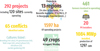 |
Fig. A.1 Overview of the database in key figures |
Existing databases listing agrivoltaic (and sometimes photovoltaic) projects, consulted on 10/31/25.
Results of the hierarchical clustering on principal components (HCPC).
Act No. 2023-175 of 10 March 2023 on Accelerating the Production of Renewable Energy (APER Act).
Technical instruction DGPE/SDPE/2025-93 published on 02/18/25.
A bill “aimed at ensuring the rational and fair development of agrivoltaics” (No. 962), dated 13 February 2025, notably proposes limiting the maximum capacity of installations to 5 MWp and their surface area to 10 hectares, with the objective of encouraging smaller projects and ensuring a more equitable distribution of value.
For a detailed typology of agrivoltaic projects, read the French Environment and Energy Management Agency’s guide Caractériser les projets photovoltaïques sur terrains agricoles et l'agrivoltaïsme, published on 04/27/22.
The sample used for this analysis consists of 248 agrivoltaic sites for which installed capacity is known. Among these, 55 agrivoltaic sites are subject to conflicts.
Measured in megawatt-peak (MWp), the installed capacity designates how much power solar arrays could produce under ideal sunlight and temperature. Figure 1 compares the distribution of installed capacity between conflicting and non-conflicting projects, regardless of the stage of the projects (in development, under construction, in operation, etc.).
We first coded the conflicts using keywords identified in the literature as well as those that appeared to emerge from the conflict descriptions and then grouped the 64 initially identified keywords into six categories.
45 inhabitants/km2, i.e., 0.38 times the population density of mainland France, according to the website of the association Territoires Fertiles, consulted on 11/26/2025: https://territoiresfertiles.fr/diagnostics/yonne/maillons/consommation?echelleterritoriale=departement
Excerpt from the developer’s website, consulted on 11/26/2025: https://www.baywa-re.fr/fr/projets/solaire/chitry#Le-projet-en-bref
Excerpt from the article “Un collectif d'associations appelle à une mobilisation face au développement de l'agrivoltaïsme dans la Nièvre”, published on the website of Le Journal du Centre, 03/20/2025: https://www.lejdc.fr/nevers-58000/economie/un-collectif-d-associations-appelle-a-une-mobilisation-face-au-developpement-de-l-agrivoltaisme-dans-la-nievre_14657518/?fbclid=IwY2xjawL1eYxleHRuA2FlbQIxMQBicmlkETEzREtjbEsxYTBQSGxTYkJ2AR4HZ_tjkzYhcxX2U17KndediXER2Ph_-g2gRKLZ1dhfONTbxS1QAthA1U_gkA_aem_yTHnbKjqitHs_mLSavGdmg
Excerpt from the article “Un nouveau projet de parc photovoltaïque sur plus de 25 ha dans le Lot”, published on the website of La Dépêche, 01/29/2025: https://www.ladepeche.fr/2025/01/29/un-nouveau-projet-de-parc-photovoltaique-sur-plus-de-25-ha-dans-le-lot-12476053.php
Excerpt from the website of the association Quels Paysages pour la Piège, consulted on 11/26/2025: https://www.quels-paysages-pour-la-piege.com/le-projet-photovolta%C3%AFque
Cite this article as: Zoé Zerbib, Xavier Arnauld de Sartre, Frédéric Wurtz, Agrivoltaics in Practice: Forms and Drivers of Conflicts, EPJ Photovoltaics 17, 21 (2026), https://doi.org/10.1051/epjpv/2026013
All Tables
Existing databases listing agrivoltaic (and sometimes photovoltaic) projects, consulted on 10/31/25.
All Figures
|
Fig. 1 Boxplots comparing the distribution of installed capacity between conflicting and non-conflicting agrivoltaic projects. |
| In the text | |
|
Fig. A.1 Overview of the database in key figures |
| In the text | |
Current usage metrics show cumulative count of Article Views (full-text article views including HTML views, PDF and ePub downloads, according to the available data) and Abstracts Views on Vision4Press platform.
Data correspond to usage on the plateform after 2015. The current usage metrics is available 48-96 hours after online publication and is updated daily on week days.
Initial download of the metrics may take a while.